
Group Travel
Emerald Beach Properties Group Sales for Large Groups

Panama City Beach hosts many large events every year for many types of groups. A retreat for your company, your club or organization at the beach can be an experience for all attendees. But with so many different providers of vacation rental properties, it can be difficult for organizers to make sure everyone in their group finds appropriate lodging. Emerald Beach Properties Group sales can help you with this. Once you let us know how many spaces you need, we can set it up to make booking simple either for individuals or for the group as a whole.
What Emerald Beach Properties Group Sales Means for Clients
Emerald Beach Properties provides a point of contact for the group organizer to make the vacation rental part of your meeting go smoothly. We will let you know what is available near the site you have chosen for your activities. And we will help you organize the best fit for each individual vacation rental.
For attendees, we provide a point of contact to pay for their rental and to call once they arrive if issues arise.
The objective is to identify which vacation rentals will work for your group.
Choosing a Location for your Meeting or Event
Panama City Beach has two large convention facilities located in the Edgewater area and the Boardwalk area. Check with those centers to book your group activities and then call Emerald Beach Properties to assist with booking the individual vacation rentals for your attendees.
Location still carries substantial weight in these choices. A beachfront condominium offers immediate access to the water and plenty of things to do during down time between meetings or activities. You'll want to select lodgings where your attendees can spread out with their families and enjoy the larger gathering at the same time. Proximity to the beach matters, but so do road access, parking, elevator capacity, nearby dining, and the overall experience attendees will have from arrival through checkout.
The property itself also needs to match the likely guest. Families often prioritize sleeping capacity, practical kitchens, laundry access, and uncomplicated beach access. Couples may value a polished interior, private balcony, and proximity to restaurants or entertainment. Larger groups need layouts that work in practice, not just a high advertised occupancy number. A property that sleeps ten on paper may feel crowded if the living areas, bathrooms, or parking arrangements cannot support that number comfortably. Let us assist you in matching your attendees needs to the available lodging alternatives near the site of your group activities.
Planning Your Group Event
Check with the Panama City Convention and Visitors Bureau and the staff at the location of your event for help with planning. There are many different activities that the area has to offer your attendees in addition to your planned activities.
Your Group Sales vacation rental manager can make suggestions, too. They are ready to help you make your event a BIG success!
Choosing a Management Company to Handle Group Reservations
Select a management company that is experienced in handling Group Reservations. You should look for recommendations from the event location and the Convention and Visitors Bureau. Also ask how many other conventions or group sales events the management company has handled in the past year.
Remember to ask about how many units the company has available and the location of the units.
Spend some time looking at the management company's website to see what the accommodations look like before committing.
Communicating to Your Attendees
Once you have selected one or more management companies to handle your Group Sales, communicate their information to your attendees and those management companies should be able to take it from there. They'll make sure all attendees get booked into suitable vacation rentals for your large event.
Questions from Group Members
Please have your attendees contact the management company handling their vacation rental directly for any questions or issues that arise.
The management company will take care of everything with your attendees related to their vacation rental so, you as the organizer, won't have to worry.
This will free your time as the organizer to focus on the event planning in advance and in running it once you all arrive.
A Transaction Process Built on Accountability
By choosing a professional management company to handle your group reservations, you attendees will have a smooth and secure transaction process for reserving their vacation rental. Professional vacation rental managers have systems in place to successfully handle a large number of reservations every week so adding a large group event should be no problem.
A professional management company with experience in Group Sales, like Emerald Beach Properties, will help make your event or meeting a success. If your attendees in your group are happy, it will make you life much easier as the organizer.
Vacation Rentals for Large Group Events in Panama City Beach

Panama City Beach hosts many large events annually. If you are attending one of those events with a large group such as a sports or dance team, you'll want to have one person in the group interface with a vacation rental company like Emerald Beach Properties. An experienced vacation rental management company can help your group find lodging that is convenient to your event and near your team members.
A reunion, destination birthday, team retreat, wedding weekend, or multigenerational family trip each places different demands on a vacation rental or a group of vacation rentals. The best choice gives your group room to gather without sacrificing privacy, access, safety, or a workable plan for shared costs.
Start With the Event
What are your dates and are groups arriving and leaving on different dates. Start a list of which groups want to stay together and their needs. Share this list with the property management company and they should help you place your group in vacation rentals that will work for everyone.
A listing may sleep 16 guests, but that number does not automatically mean 16 adults can cook, eat, relax, and get ready at the same time. Sleeping capacity tells only part of the story. A group that spends most of the day on the beach may manage well in a more compact rental. A group planning catered dinners, games, or a milestone celebration needs usable common areas, adequate seating, and a kitchen designed for real meal preparation.
Gather info from your group
With all the condos available in Panama City Beach, each family or sub-group can have their own vacation rental. This gives your group flexibility and lets you choose what will work best for each group.
Review the bed layout closely. Bunk rooms work well for children, teenagers, and close friends, but they may not suit couples who expect privacy. Confirm how many rooms have private bathrooms, which bedrooms sit near living areas, and whether anyone needs a first-floor room. One overlooked staircase can create a serious problem for a grandparent, a guest with limited mobility, or parents carrying sleeping children.
Then look beyond the bedrooms. Check the dining table size, counter seating, outdoor seating, refrigerator capacity, and number of full bathrooms. For a large group, these practical details shape the stay more than a decorative accent wall or an extra television.
Match the vacation rental to the pace of your group
A family reunion often needs a spacious kitchen, a comfortable living room, and areas where different age groups can spread out. A fishing group may prioritize parking, outdoor storage, and an easy route to the marina. A wedding-related group may need room for a relaxed brunch, but not necessarily permission to host a formal reception at the property.
Do not assume a vacation rental allows events simply because it accommodates many overnight guests. Most homes have occupancy limits, parking rules, quiet hours, and restrictions on outside visitors. Ask about the intended use before you book. Clear expectations protect your reservation and your relationship with neighbors.
Choose the Right Setting for a Large Group Event
Panama City Beach offers distinct settings, from quiet residential streets to active areas near restaurants, attractions, and public beach access. The right location depends on how your group plans to move through the week.
A beachfront rental can simplify beach days and give guests a natural gathering point. It may also carry a higher rate, limited parking, and more demand during peak travel dates. A vacation rental a short drive from the sand may offer more square footage or better vehicle access for the same budget. Neither option wins in every situation.
Consider arrival, parking, and daily logistics
Large groups often arrive in several vehicles and on different schedules. Confirm the number of vehicles the property can accommodate and whether the parking arrangement works for trucks, SUVs, golf carts, or trailers when applicable. Never rely on street parking unless the property manager confirms it is allowed.
Respect the neighborhood from the beginning
Group trips create more activity than a typical family stay. Set a clear standard before arrival: respect quiet hours, keep vehicles in approved spaces, manage trash correctly, and limit outdoor noise at night. These rules do more than prevent complaints. They help the group preserve a relaxed, welcome atmosphere throughout the stay.
Build a Budget That Holds Up
Large-group travel works best when the organizer provides a complete cost picture early. The nightly rate matters, but it does not stand alone. Account for cleaning fees, taxes, travel protection if selected, deposits when required, parking, groceries, beach equipment, dining, and activity costs.
Divide the lodging cost in a way that reflects the value each guest receives. Couples in private king bedrooms may reasonably pay more than guests using bunks or shared rooms. Some organizers split every expense evenly because it keeps collection simple. Others assign room-based shares because it feels more equitable. Choose the method before anyone commits.
Collect payments on a firm deadline rather than carrying the full reservation cost yourself. A clear payment schedule reduces last-minute cancellations and helps you make decisions with accurate attendance numbers. If the group size may change, book a property that remains comfortable even if a few guests drop out. Paying for a vacation rental that only works at maximum occupancy creates unnecessary pressure.
Questions to Answer Before You Reserve
A professionally managed vacation rental should provide direct answers about the home, reservation process, and stay requirements. Before you commit, confirm the details that affect your group most:
- What is the maximum overnight occupancy, and does that number include children?
- Does the property allow gatherings beyond registered overnight guests?
- How many vehicles can park on-site, and are there any restrictions?
- Which amenities come with the home, and which require separate rental or planning?
- What are the check-in, check-out, cancellation, and noise policies?
Ask for clarification in writing when a rule affects your plans. For example, if you expect a photographer, caterer, florist, or extended family visitors to stop by, explain that before booking. A direct conversation is far easier than trying to solve a policy issue after the group has arrived.
Designate One Person With Authority to Coordinate the Stay
Every successful group trip needs one organizer, even when several people share the planning. That person does not need to manage every meal or activity. They do need a reliable way to distribute property information, collect payments, communicate rules, and handle questions before guests contact the manager separately.
Send the group a simple arrival plan several days before the trip. Include the property address, check-in time, parking instructions, room assignments, grocery plan, and basic house expectations. Assign bedrooms before arrival when possible. Guests who know where they will sleep arrive calmer and settle in faster.
Keep the first night simple. Order food, plan a casual meal, or assign a small grocery team rather than expecting everyone to shop independently. After a day of travel, the group will appreciate a clear plan more than an ambitious schedule.
During the stay, protect a few quiet windows. Not every guest wants to attend every outing, and not every child follows the same nap or bedtime routine. A home with several gathering zones helps, but the organizer also needs to set an expectation that guests can participate at their own pace.
Two Or More Nearby Rentals Make More Sense
One large home creates a central gathering place and often makes coordination easier. Still, multiple nearby properties can offer a better solution for very large groups, mixed-age families, or groups that need more privacy. Separate vacation rentals can give grandparents quieter sleeping space, provide more bathrooms, and reduce the strain on one kitchen and living area.
This option requires more coordination. You must confirm the walking or driving distance between the rentals, divide meals and supplies thoughtfully, and avoid treating either property as an unapproved event venue. If the group plans to gather at one rental,it must support the number of people present under its stated rules.
For many reunions and extended-family trips, the practical answer is one primary gathering vacation rental plus one or more nearby rentals. That arrangement works best when the group sets expectations early and respects each property's occupancy limits.
The right rental gives a large group more than a place to sleep. It creates room for shared breakfasts, sandy afternoons, late-night stories, and the quiet breaks that keep everyone comfortable. Plan around the real needs of your guests, confirm the rules before you reserve, and give your group a stay that feels organized without feeling over managed.
Family Reunion Vacation Rental Planning Tips
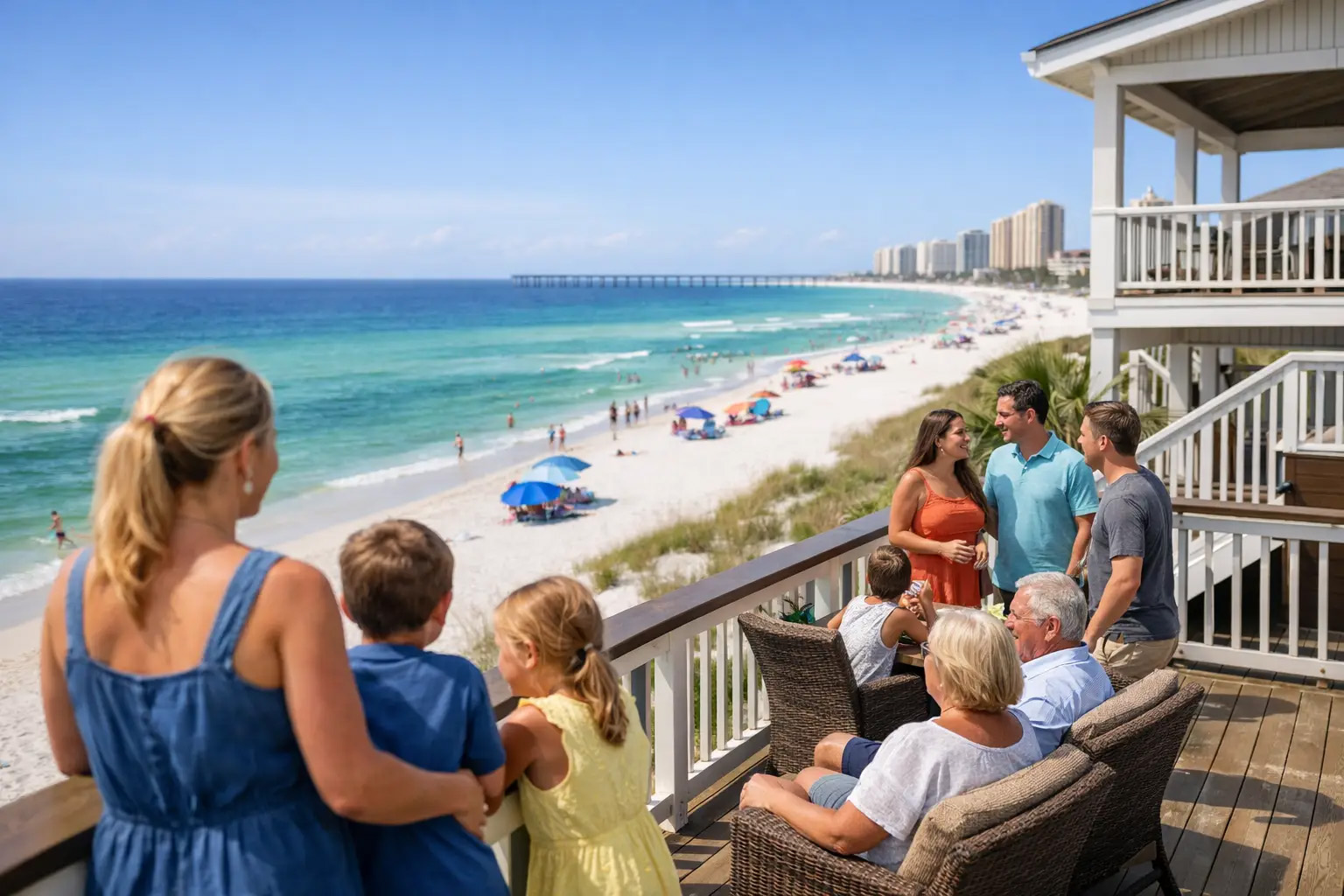
A family reunion beach vacation rental can turn a long-overdue gathering into a week of shared breakfasts, sandy feet at the door, and sunsets everyone remembers. Make your family reunion extra special by making sure no one feels crowded, the sleeping plan is well thought out, and remember, one person shouldn't do all the planning. Choosing the right property and setting expectations before anyone packs a bag is key to making your family trip one to remember.
For families gathering in Panama City Beach, one or more condos gives the group room to spend time together without requiring every meal, conversation, and activity to happen in a restaurant or hotel lobby. The strongest plans leave room for both connection and privacy.
Start With the Family, Not the Bedroom Count
A large home can look ideal on paper and still fail the group. Before comparing properties, get a clear headcount that includes adults, children, infants, and anyone who may stay only part of the trip. Then ask a few practical questions: Who has special needs? Who will share a room? Will teenagers want their own space? Does anyone need quiet at night or an easy walk to the beach?
Bedroom count matters, but bed configuration matters more. A home with four bedrooms may work well for four couples and several children if it includes bunk rooms. That same home may not work for six couples who expect private rooms. Review each bedroom, bathroom, and sleeping area before presenting options to the family. Choosing condos that are in the same building or complex can easily meet all these needs and provide a little extra privacy.
Common areas deserve equal attention. Look for enough seating at the dining table, a living area where the group can gather comfortably, outdoor space for evening conversations, and a kitchen that can handle more than coffee and snacks. A reunion location should support time together without forcing everyone into one crowded room. You can choose one large condo or townhouse and one or more adjacent smaller units.
Choose the Right Family Reunion Beach Vacation Rental Location
Beachfront access appeals to many groups, but location involves more than the view. Some families value stepping directly onto the sand. Others prefer a quieter residential setting, nearby restaurants, easy grocery access, or a shorter drive from local attractions. The right choice depends on how the family plans to spend its days.
In Panama City Beach, beach access usually shapes the entire trip. A vacation rental near the beach makes it easier for grandparents to return indoors when they need a break and lets parents move children between the condo and beach without loading the car. Still, groups should consider parking, the walk to the sand, traffic patterns, and whether the property offers the privacy they want.
Think through arrival and departure, too. If relatives drive from several states away, straightforward parking can reduce stress immediately. If family members fly in, plan transportation early and confirm whether the group needs rental vehicles, ride shares, or airport pickups. A well-positioned vacation rental saves time that the family can spend together.
Set a Budget That Accounts for the Full Stay
The nightly rate only starts the conversation. A responsible reunion budget accounts for taxes, cleaning charges, reservation fees, refundable deposits when applicable, travel costs, groceries, beach gear, and planned activities. Share the complete expected cost before anyone commits.
Decide how the group will divide expenses. Some families split the total evenly by household. Others charge more for a primary suite, private bathroom, or separate living space. Neither approach fits every group. What matters is that the organizer explains the method early and gives relatives a chance to ask questions before payment deadlines arrive.
Avoid building the trip around an unrealistically low rate. A less expensive property farther from the beach may create extra transportation needs. A larger place with a better kitchen and laundry setup may cost more upfront but reduce restaurant meals and simplify a week with children. Compare the total experience, not only the initial number.
Read the Property Details Like a Group Coordinator
Every vacation home has its own capacity limits, parking requirements, age requirements, and quiet-hour rules. Review these details before booking, then share the relevant rules with every adult in the group. This protects the reservation and prevents avoidable issues after arrival.
Pay close attention to amenities that affect daily comfort. Confirm the number of bathrooms, laundry availability, pool access and safety rules, grill availability, elevator access if relevant, Wi-Fi reliability for remote work, and what the home supplies. Vacation rentals usually do not include beach chairs, baby equipment, extra linens, or a fully stocked pantry.
If the family plans a special dinner, anniversary toast, or casual gathering with local relatives, ask about guest limits and event restrictions before making plans. A vacation rental provides a place to gather, but it does not automatically permit a large event. Clear information protects both guests and the home.
Build a Flexible Plan for Different Generations
The best reunions do not schedule every hour. Families need a few anchor moments, such as a first-night dinner, a beach morning, a group photo, or a final meal together. Between those moments, give people freedom to rest, fish, shop, explore, or simply sit on the balcony with a book.
That flexibility matters when several generations travel together. Young children need naps. Teens want independent time but do need supervision for safety. Grandparents may prefer a slower morning. Parents often appreciate one evening when another adult watches the kids. Build those realities into the plan instead of treating them as interruptions.
A simple shared itinerary can help, especially for large groups. Include arrival windows, grocery plans, dinner reservations, and any activity that requires tickets. Keep it practical. The goal is not to manage every family member. The goal is to keep people informed and reduce repeated questions.
Assign Small Responsibilities Before Arrival
One organizer should not have to manage the entire reunion alone. Divide a few tasks among willing adults: one person can coordinate groceries, another can plan a low-key group meal, and another can manage the photo schedule or beach equipment. Small assignments create shared ownership without turning a vacation into a committee meeting.
For a group of ten or more, a short pre-trip message helps. Include the property address and arrival instructions when available, parking guidance, house rules, the sleeping plan, what to bring, and one contact person for urgent travel updates. Keep the message direct so relatives can find what they need quickly. A group chat can be great for this.
Consider food realistically. A large kitchen makes group meals easier, but it does not mean everyone wants to cook every day. Plan one or two meals at the largest condo and organize a grocery order or shopping list, and leave open nights for restaurants or leftovers. This approach limits waste and avoids placing the kitchen burden on one family member or group.
Protect the Home and the Reunion
Vacation rental rules support a safe, comfortable stay for everyone. Respect occupancy limits, park only in approved areas, follow pool and beach safety rules, and keep outdoor noise reasonable. These basics protect the property, respect neighbors, and help the family avoid disruptions.
Before checkout, give the group a simple departure plan. Ask each household to clear its food, gather personal belongings, and help with a final walk-through of shared spaces. Children often leave chargers, toys, and swimsuits behind, while adults tend to miss bathroom drawers and refrigerator shelves.
A successful reunion does not require a perfect schedule or a vacation rental that meets every preference. It needs a property or group of properteis that fits the people attending, a budget the group understands, and enough breathing room for everyone to enjoy the beach in their own way. Choose with care, communicate early, and let the beach handle the rest.
Can Vacation Rentals Fit Large Families?

A large family trip usually breaks down in the same places - sleeping arrangements, bathroom traffic, parking, and the question nobody asks soon enough: will everyone actually be comfortable for the entire trip? That is why many travelers ask, can vacation rentals fit large families comfortably? In many cases, yes. But the real answer depends on your family group, the layout and not just the advertised guest count.
A property that sleeps twelve on paper may feel tight for eight in practice. Another home with a smart floor plan, enough bathrooms, and usable common space can handle grandparents, cousins, and kids without turning into a bottleneck. Families do best when they look past the headline number and evaluate how the property might work for their group on a day to day basis.
Can vacation rentals fit large families in real life?
They can, and almost always better than standard hotel setups. A hotel may split a family across multiple rooms and floors, which creates more coordination, less privacy for parents, and fewer shared spaces. A well-managed vacation rental gives the group one place to gather, cook, rest, and keep a predictable routine.
That advantage matters more when the trip includes multiple generations. Grandparents may need a first-floor bedroom or fewer stairs. Parents may want a separate living area after the kids go to bed. Teenagers usually need personal space more than anyone else. Vacation rentals can meet those needs, but only if the property offers real separation between sleeping zones and enough room for people to spread out.
This is where families often make the wrong call. They assume bedroom count tells the whole story. It does not. Four bedrooms can work beautifully for a larger group if the home includes bunk space for children, a sleeper sofa in a second living room, and three or more bathrooms. A six-bedroom property can still feel inefficient if two bedrooms are tiny, one is a pass-through, and the kitchen cannot support a group meal.
What large families should check before booking
Start with the sleeping plan. Do not stop at the phrase sleeps 10 or sleeps 14. Read the actual bed mix. Two king beds, one queen, and four twin bunks fit a different group than five queen beds. Families with small children may welcome bunk rooms. Adult siblings with spouses usually will not. If the group includes older relatives, confirm bed height, stair access, and whether anyone must walk through another bedroom to reach a bathroom.
Bathrooms matter almost as much as bedrooms. A large family can work around tighter sleeping arrangements for a few nights, but too few bathrooms creates stress fast. Three bathrooms for ten guests may work if one serves a bunk room and another connects to the main suite. Two bathrooms for ten guests usually means lines, rushed showers, and can create frustration before anyone reaches the beach or is ready for dinner.
Common areas deserve the same scrutiny. Look for seating that matches the group size, a dining table that can handle shared meals, and a kitchen that supports more than one person cooking. Many listings show a beautiful open room, but the details tell the truth. If the living room seats five and the home sleeps twelve, part of the group will always feel displaced.
Parking also gets overlooked. Large families often arrive in several vehicles. A property that technically fits the group indoors may still become difficult if parking is limited or strict. The same goes for elevators, beach access, and entry stairs. Convenience does not sound critical during booking, but it affects every day of the stay.
Space matters more than headcount
The best vacation rental for a large family is not always the one with the highest occupancy. It is the one that balances private space and shared space. Families need room to be together, but they also need relief from each other.
That balance often comes from the floor plan. Homes with split bedroom layouts, multiple living spaces, or a quiet sitting area tend to perform better for bigger groups. So do properties with outdoor areas where part of the family can gather while others rest inside. Balconies, patios, and easy beach access create breathing room, which helps everyone enjoy the trip.
In beach markets such as Panama City Beach, this point becomes even more practical. Families usually spend part of the day in and out with towels, coolers, sand, and changing schedules. A cramped entry, one small fridge, or limited storage can turn a good-looking property into a frustrating one. On the other hand, a rental near the beach with strong indoor-outdoor flow and enough room for gear often feels easier than a larger property with an awkward layout.
The trade-offs families should expect
Large-family rentals come with trade-offs, and experienced travelers plan for them early. The first trade-off is budget. A bigger home may cost more upfront, but multiple hotel rooms add up quickly, especially once parking, resort fees, and eating every meal out enter the picture. For many groups, a vacation rental creates better total value even if the nightly rate looks higher at first glance.
The second trade-off is privacy. Sharing a home gives families more connection, but less separation than completely independent hotel rooms. Some groups love that. Others need clearer boundaries. If your family includes early risers, toddlers, night owls, or relatives who prefer quiet, choose a property with doors, zones, and enough distance between bedrooms.
The third trade-off is availability. Large-family properties book earlier because the inventory is smaller. Families who need a specific week, a certain bedroom mix, or beach proximity should plan ahead. Waiting limits options and often forces compromises on layout or location.
How to tell if a rental will actually work for your group
The most reliable approach is to build your group plan before you shop. Count adults, children, couples, and anyone with mobility concerns. Decide who can share a room and who cannot. Think through mornings, not just nights. Where will coffee happen? Who needs a quiet nap space? Will children go to bed before adults finish dinner? These answers reveal what the property must provide.
Next, match the home to your routines. A family that cooks breakfast and dinner every day should prioritize kitchen space, dining capacity, and grocery storage. A group that plans to stay on the beach most of the time may care more about outdoor showers, laundry, and location. If the trip includes grandparents and young kids, easy access often matters more than luxury finishes.
Photos help, but they do not answer everything. Read descriptions carefully and look for specifics. Good property management companies describe bed types, bathroom counts, parking, beach access, and occupancy rules with precision. That level of detail usually reflects stronger operations overall. Emerald Beach Properties, for example, serves guests best when expectations stay clear from the start. That clarity helps families avoid mismatches that can affect the entire trip.
When vacation rentals are a strong fit for large families
Vacation rentals usually work best for families who want shared time without constant logistics. They make sense when the group values eating together, keeping children close, and having one home base near the beach. They also work well for milestone trips - reunions, birthdays, anniversaries, and school-break vacations where people want more than a place to sleep.
They may be less ideal for families who want maximum separation, highly flexible arrival patterns, or full-service hotel amenities. That does not mean a rental cannot work. It means the group should be honest about expectations. The right answer depends on how your family travels.
There are many vacation rentals managed by Emerald Beach Properties that are in the same complex as others so, choosing to split your group into two, three or more properties may work best for you. For example, for a really large group, you may choose to rent a large 3-4 bedroom condo and additional 1 or 2 bedroom units for the members of the party who would like more privacy. That way, you can have one large kitchen for group meals and plenty of bathrooms and bedrooms, too. Call us at (850) 234-0997 and we can assist you with planning your trip and choosing your best options for vacation rentals.
For many larger groups, the best stay comes from choosing a property that feels slightly bigger than the minimum requirement. A little extra room changes the tone of the trip. It gives children space to play, adults space to talk, and everyone a better chance to relax.
If your group is asking whether vacation rentals can handle a large family, the answer is definitely yes - when you evaluate the property as a living space, not just a listing. Count bathrooms as carefully as beds. Study the layout. Think about mornings, parking, meals, and downtime. When the home fits the way your family actually moves, the trip feels easier from day one.
Group Vacation Planning Guide for Smooth Trips

One missed payment, three different arrival times, and a group chat full of half-answers can turn a beach trip into work. A strong group vacation planning guide prevents that. When several households travel together, the goal is not just to book a place to sleep. The goal is to set clear expectations early, protect everyone’s time and money, and choose a rental that actually fits how your group will live for a few days.
What a group vacation planning guide should solve first
Most group trips do not fail because people chose the wrong destination. They fail because nobody made the hard decisions soon enough. Who commits first? How will the group split costs? What happens if one family backs out? Which bedrooms go to which guests? If you leave those questions open, small issues become personal issues.
Start with one trip leader. That person does not need to control every detail, but someone must own the timeline, confirm decisions, and keep records in one place. Groups work better when one person tracks payments, another handles meal planning, and another coordinates activities. Shared responsibility works. Shared responsibility without clear roles does not.
The earliest conversations should cover three items: budget range, travel dates, and non-negotiables. Non-negotiables include things like direct beach access, a pool, elevator access, kid-friendly sleeping arrangements, or enough parking for the number of vehicles the group will bring. If your group wants a low-stress stay, define those needs before anyone falls in love with a particular vacation rental that won't work for your group.
Set the budget before you shop
Groups often search for properties too early. They see photos first, then try to force the budget to match. That creates issues that will need to be resolved. Set the financial rules before you compare listings of various vacation rentals.
A useful budget conversation covers more than the nightly rate. It should include taxes, cleaning fees, parking costs, grocery plans, dining out, equipment rentals, and a cushion for unexpected expenses. A larger home can offer better value per person, but only if the group can handle the total cost without pressure. Saving money on a smaller place may backfire if the layout creates crowding and conflict.
Be direct about payment structure. Decide whether one person will collect funds and pay the balance or whether each household will reimburse on a fixed schedule. Put cancellation expectations in writing in the group chat or email thread. That sounds formal, but it prevents confusion later.
A simple rule for splitting costs fairly
Equal split works when every guest uses the property in roughly the same way. It stops working when one couple takes the primary suite while another family sleeps in bunk rooms with three kids. In that case, assign rooms first and then adjust shares. You do not need a complicated formula, but you do need a method the group agrees on before payment deadlines hit.
Choosing dates that work for everyone
Finding dates that work for everyone can drag on for weeks. Set a deadline. Offer two or three realistic options, then ask for firm responses. If the group cannot align on every schedule, prioritize the guests who committed early and can meet the payment terms.
This is where flexibility matters. A perfect weekend in peak season may cost far more than a midweek stay or shoulder-season trip. Families with school calendars may have fewer options. Couples or remote workers may have more room to adjust. If your group wants a better property for the same budget, shifting dates often solves the problem faster than lowering standards.
For Panama City Beach trips, season also shapes the experience. Summer brings energy, fuller beaches, and stronger demand. Spring and early fall can offer a more relaxed pace with favorable weather. The right choice depends on whether your group values activity, price control, or quiet.
Pick the right rental, not just the prettiest one
A good listing photo does not tell you how a group will function inside a property. The best rental for a group is the one that will work for your group.
Start with the floor plan. Bedroom count matters, but layout matters more. Two homes with the same occupancy can feel completely different if one has clustered sleeping spaces and limited bathrooms while the other gives each household more privacy. If you travel with grandparents, small children, or guests with mobility concerns, stairs, bathroom access, and distance to the beach all matter.
Kitchen size deserves serious attention. Group trips revolve around food, even when people plan to eat out. If the property has limited counter space, not enough seating, or a cramped refrigerator, meals can become chaotic. The same goes for parking. If multiple households drive separately, confirm the number of vehicles allowed before booking. In Panama City Beach, many condos restrict the number of vehicles you can park on property. Vehicles over that number are referred to public parking areas.
The best group vacation planning guide includes house-fit questions
Ask practical questions before you commit. How many guests can sit at one table? Is there outdoor space where people can spread out? Are there quiet bedrooms for early sleepers and young children? Does the property support both togetherness and privacy?
That balance matters. Groups enjoy shared space, but they also need room to step away. A vacation rental should let people gather without forcing everyone into the same routine all day.
Build rules before the trip starts
Adults do not usually need a long rule book, but groups do need operating standards. Without them, avoidable tension shows up by day two.
Set expectations for groceries, shared meals, cleanup, noise, and visitors. Decide whether the group wants a few planned dinners together or a looser schedule. Some travelers want every hour programmed. Others want open time. Neither approach is wrong, but mixed expectations create conflict if they are not addressed during the planning phase of your trip.
Be especially clear about arrival and departure logistics. Confirm check-in time, who gets access details, where cars will park, and what each household should bring. If one guest assumes the property provides beach gear, extra towels, or a stocked kitchen, disappointment follows. Check the property listing and if it is not clear, contact the rental agent for confirmation before assuming. Strong planning removes guesswork.
Keep communication controlled and useful
Large group chats create a lot of noise. Use one main thread for decisions and one shared document for trip details. Keep the final information in a clean format: address, check-in instructions, room assignments, payment status, grocery plan, emergency contacts, and departure tasks.
This matters more than people think. When the check-in code gets buried under jokes, restaurant screenshots, and changing dinner opinions, someone always asks for it again while standing in the driveway.
A clear communication system also protects the trip lead from becoming a full-time help desk. Once details are documented, everyone can find what they need without repeated calls or texts.
Plan activities with restraint
Groups often overbook themselves. They want a boat day, a fishing charter, a dinner reservation every night, and a full list of local stops. Then reality hits. Kids need naps. Weather shifts. Half the group wants beach time while the other half wants air conditioning and a quiet afternoon.
A better approach is to choose one or two anchor activities and leave room around them. For a beach vacation, the property itself often carries much of the experience. If the rental offers easy beach access, comfortable shared space, and a strong location, you do not need to fill every hour.
This is one reason professionally managed vacation rentals matter for group travel. Reliable property information, clear check-in procedures, and responsive support reduce uncertainty. That stability helps when several households rely on one booking to go right.
Expect trade-offs and decide on purpose
Every group trip involves trade-offs. A larger gulf-front vacation rental may cost more but reduce transportation issues and keep the group together. A lower-cost property a few blocks back may free up budget for dining and activities, but it can add daily logistics, especially with children or older guests.
Privacy versus price is another common decision. Some groups prefer to maximize occupancy and lower the per-person cost. Others would rather pay more for extra bathrooms, better sleeping arrangements, and room to breathe. Neither choice is automatically better. The right decision depends on the group’s priorities and tolerance for inconvenience.
If you book early, you usually get more choices of available vacation rental inventory and more time to organize. If you wait, you may find a deal, but options narrow and the planning pressure rises. For larger groups, early booking usually wins because fit matters more than last-minute savings.
Final checks that protect the trip
Before the booking becomes final, verify occupancy limits, parking rules, pet policies, payment deadlines, and cancellation terms. Read the details carefully. For group travel, assumptions can cost everyone in your group money.
Then complete one final review with the full group. Confirm the guest count, room plan, and total budget. Once everyone agrees, stop reopening settled issues. Strong trips move forward because the group respects deadlines and decisions.
Emerald Beach Properties sees this firsthand with beach travelers who want more than a place to stay. They want a property that supports the trip they actually planned.
The best group vacations feel easy once you arrive, but they only feel easy because someone handled the details with discipline before the car was packed. If you give the planning the same attention you give the destination, the beach has room to do the rest.