
Kid Friendly
Fall Events in Panama City Beach: Plan Your Stay
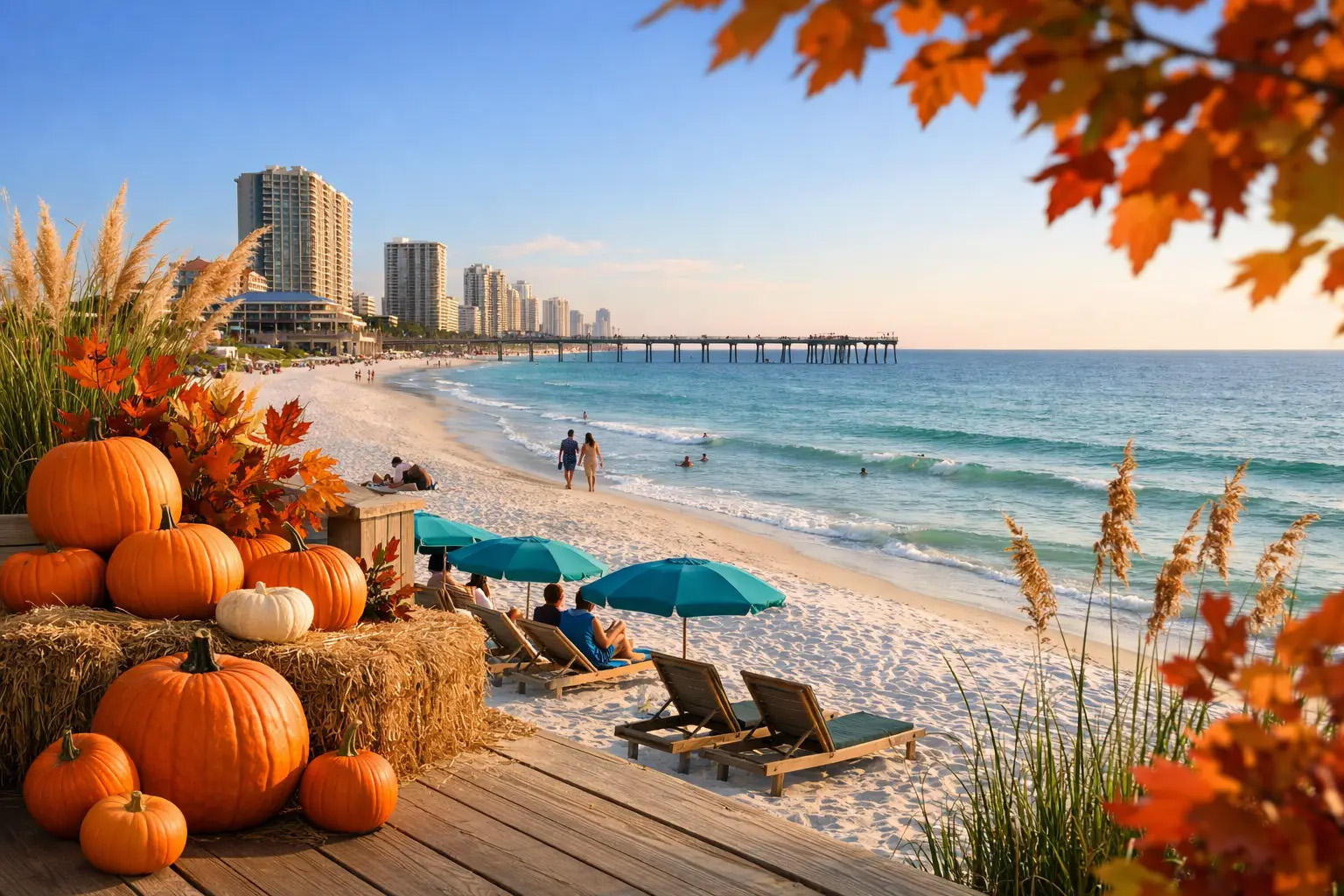
The Gulf looks different in fall. The water is still inviting, the summer crowds are gone, and fall events in Panama City Beach give a beach getaway a clear reason to gather everyone around a calendar. Whether your group prefers fresh seafood, live music, endurance sports, or a full weekend of family activities, the season offers so many different opprotunities for visitors.
Fall also rewards travelers who plan with purpose. A major event can change traffic patterns, restaurant wait times, and the availability of vacation rentals near the beach. Choose the experience you want first, then select a property and arrival date that support your plans.
Why Fall Works for a Panama City Beach Getaway
Panama City Beach definitely does not close down after summer. It shifts gears. Families can enjoy more room on the sand, couples can build a quieter trip around dining and local entertainment, and groups can attend signature events without giving up beach time.
The weather remains one of the season's strongest advantages. Days still feel warm and bright, while evenings bring the welcome relief that makes an outdoor concert, festival, or sunset walk more comfortable. Conditions vary from week to week, so travelers should pack layers, watch the forecast, and keep outdoor plans flexible.
Fall stays can also offer stronger value than peak summer dates. That does not mean every weekend runs quiet. Major festivals, rallies, and athletic events can create high demand for well-located vacation homes and condos. Travelers who want a particular view, neighborhood, bedroom count, or pet-friendly option should reserve early.
Signature Fall Events in Panama City Beach
Event schedules, venues, admission policies, and dates can change from year to year. Confirm current details directly with each organizer before building a nonrefundable itinerary. Still, these recurring event types help visitors understand what the fall season often brings to the area.
Seafood Festivals and Coastal Food Weekends
Fall seafood events put Gulf flavors at the center of the weekend. Visitors can expect local seafood, chef-driven dishes, music, and the relaxed energy of an outdoor gathering near the water. These events suit couples, friend groups, and families with older children who enjoy sampling several dishes rather than sitting through one formal dinner.
Plan your meal timing carefully. Popular vendors can draw long lines during the busiest afternoon and early-evening windows. A late lunch or earlier arrival often makes the experience more enjoyable. If your vacation rental includes a full kitchen, leave room in the schedule for one quiet meal at home after the festival rather than trying to fit every meal into a crowded restaurant plan.
Pirates of the High Seas and Renaissance Fest
Ahoy Mateys! The pirate-themed fall celebration has become a family favorite because it turns a beach weekend into something more playful. Costumed characters, activities for children, entertainment, and festive public spaces give younger travelers a reason to take a break from the pool or sand.
Families should check the daily activity schedule before they arrive. Some programs work best for toddlers and elementary-age children, while evening entertainment may appeal more to teens and adults. Bring comfortable shoes, sunscreen, refillable water bottles, and a light layer for after sunset. A rental close to your preferred activity area can simplify nap breaks, stroller logistics, and end-of-day wind-down time.
And don't forget to book you Pirate Cruise on the Sea Dragon for an unforgettable journey! Sea Dragon Pirate Cruise.
There's also the Pirates Voyage dinner Show in PCB for dinner and a show. Pirates Voyage Dinner and Show.
Make it a pirate getaway over the long Columbus Day Weekend!
Motorcycle Rally Weekends
The Thunder Beach fall motorcycle rally draws riders from across the region and gives the destination a distinctly different energy. You'll see bikes lining major routes, organized rides, vendor areas, and special entertainment across the beach communities.
Riders should prioritize a rental with practical parking, easy access to the roads they plan to travel, and clear property rules. Other visitors should not assume the entire area becomes inaccessible, but they should expect heavier traffic near rally hubs and more activity at certain restaurants and entertainment districts. If a quiet evening matters most, choose a home or condo away from the busiest gathering areas.
Ironman Florida and Endurance Events
The annual Ironman race and related endurance events bring athletes, support crews, and spectators to the beach each fall. Race day offers an exciting atmosphere, but it requires deliberate planning. Road closures, early starts, and limited access near portions of the course can affect transportation.
Athletes benefit from a rental that supports rest and routine. Look for enough kitchen space to manage pre-race meals, comfortable sleeping arrangements, and a location that reduces race-morning stress. Spectators should identify viewing areas and transportation options in advance. A few minutes of planning can prevent a long walk or a missed transition point.
How to Choose the Right Event Weekend
The right fall trip depends on who is traveling and what they want from the beach. A family with young children may want daytime programming and a rental that makes it easy to return for meals and rest. A group of friends may prefer a food festival weekend with access to nightlife. Athletes need convenience and quiet more than proximity to entertainment.
Start by deciding whether the event serves as the centerpiece of the trip or simply one activity among many. If the event comes first, book around the venue or course and build your beach days around the schedule. If the beach comes first, select a less crowded weekend and choose an event you can attend casually.
It also helps to consider your arrival and departure days. Friday arrivals can overlap with event traffic and grocery runs, especially during popular weekends. Arriving a day earlier may give your group time to settle in, stock the kitchen, and enjoy the shoreline before the event schedule begins.
Plan the Details That Protect Your Vacation Time
A strong itinerary leaves space for the unexpected. Fall weather can bring a passing shower, a windy afternoon, or a cool night after a warm day. Build one indoor option into your plans, and avoid scheduling every hour around ticketed activities.
Use these practical decisions to keep the trip organized:
- Reserve your vacation rental before buying travel arrangements if your group needs specific features such as multiple bedrooms, elevator access, a private pool, or dedicated parking.
- Review the property's parking capacity and community rules, particularly during motorcycle rallies and high-attendance weekends. Not all properties allow extra parking.
- Make restaurant reservations when available, but keep one or two meals flexible for the food vendors and local spots you discover during the trip.
- Check event parking, shuttle information, bag rules, start times, and weather policies shortly before you leave home.
Guests should also respect the difference between an event venue and a vacation rental community. Keep noise under control, follow parking instructions, and secure personal belongings. These basics protect the experience for your group and for the neighbors sharing the area.
Make Room for the Beach
An event can fill a weekend, but the beach remains the reason many visitors choose Panama City Beach. Schedule at least one open morning or late afternoon for it. The softer fall light, quieter shoreline, and cooler temperatures create an excellent setting for a walk, a beach picnic, or simply a few unplanned hours by the water.
This balance matters most on short stays. Trying to attend every festival activity can leave a group feeling rushed. Choose the one or two moments that matter most, then let the rest of the trip unfold at the pace of the coast.
Emerald Beach Properties helps guests find vacation rental accommodations that fit how they plan to experience the area, whether that means gathering the family after a festival day or giving an athlete a comfortable place to prepare and recover.
Fall rewards travelers who arrive prepared but do not over manage the experience. Pick an event that fits your group, secure a well-matched place to stay, and leave enough time for the Gulf to do what it does best: slow everyone down.
Best Family Beach Rental Features That Matter
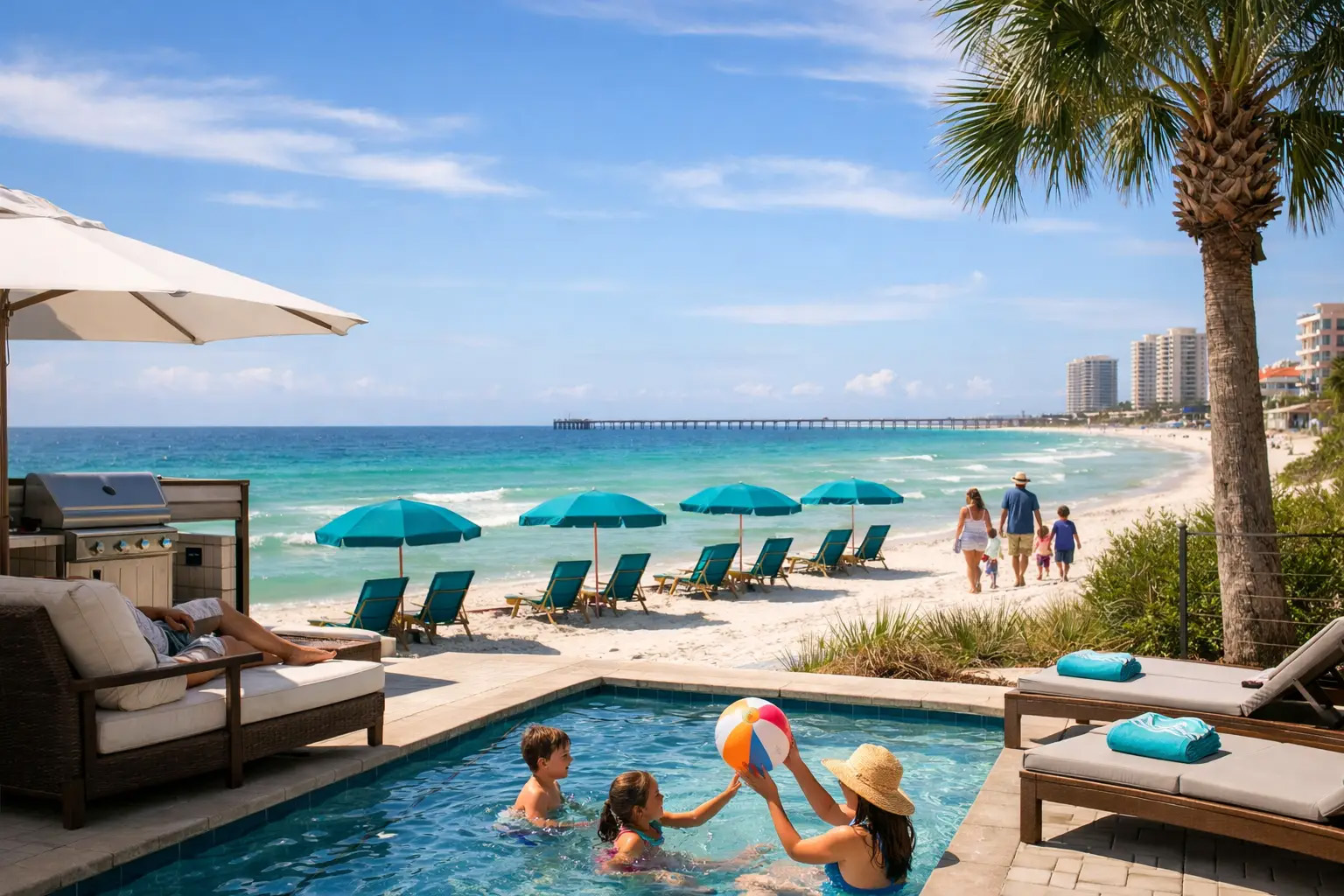
A beach vacation can lose its easygoing rhythm quickly when your vacation rental lacks the basics you really need to be comfortable: enough beds, a workable kitchen, a place to dry swimsuits, or a safe route to the sand. The best family beach rental features do more than look good in listing photos. They support real vacation days, from early breakfasts before the beach to tired children returning after sunset.
For families visiting Panama City Beach, the right property helps everyone spend less time managing logistics and more time enjoying the beach. Square footage matters, but a smart layout, practical amenities, and a dependable location often matter more.
Best Family Beach Rental Features to Prioritize
A layout that gives everyone room to reset
Families don't need a mansion to vacation comfortably, but they do need a place that fits the way they travel. Start with the bedroom configuration, not simply the total guest count. A property that sleeps eight may offer four adult-oriented beds with little consideration for young children, teens, or grandparents.
Look for bedrooms that provide privacy for adults and sleeping arrangements that make sense for children. Bunk rooms can work well for siblings and cousins, while a bedroom on the main living level can help families traveling with someone who prefers to avoid stairs. If grandparents join the trip, confirm bathroom access and the number of steps between parking, the entry, and their bedroom.
The common areas deserve equal attention. An open living room and kitchen create a useful gathering space, but the room still needs adequate seating. After a full day in the sun, families want space to spread out for dinner, a movie, a board game, or a quiet break without sitting shoulder to shoulder.
A kitchen designed for vacation use
A kitchen can significantly change the cost and pace of a family beach trip. It does not need restaurant-level equipment, but it should handle the meals your group plans to prepare. Review the listing details for a full-size refrigerator, oven, microwave, dishwasher, coffee maker, and sufficient cookware.
A kitchen island or dining table gives families a central spot for breakfast, lunches, and evening meals. It also gives parents a place to organize sunscreen, snacks, water bottles, and the next day's plans. Outdoor dining space adds value when the weather cooperates, especially if the rental has a balcony with a Gulf view.
Consider your habits honestly. If your family plans to eat out for every meal, kitchen size may be lower on your list. If you travel with small children, food allergies, athletes, or several households, a well-equipped kitchen will rank near the top.
In-unit laundry and places for wet gear
Sand arrives in every bag, and wet towels multiply faster than most families expect. In-unit laundry ranks among the most useful beach rental amenities because it reduces packing, keeps bedrooms cleaner, and makes the ride home easier.
A washer and dryer also help families with young children manage spills and frequent wardrobe changes. For longer stays, laundry can eliminate the need to pack a week's worth of extra clothes. Check whether the rental provides a washer and dryer inside the unit or whether guests share a community laundry room, as that difference affects convenience.
Beyond laundry, look for a practical entry space, hooks, a balcony, or another area where towels and swimwear can dry. These small details protect the indoor living space from becoming a pile of damp beach gear. And, remember that it is illegal to hang towels and other items over balcony railings in Florida. It's fine to drape wet items over the outdoor chairs just not the railings.
Beach access that works for your group
“Near the beach” can mean very different things. A rental may sit across a busy road, require a lengthy walk through a large resort, or offer direct access only after several elevator rides. Also, check to see if there is tram service available for this type of rental. Families should look beyond a map pin and understand the actual route from the rental door to the sand.
Direct beach access can simplify a vacation with toddlers, beach carts, coolers, and chairs. A short walk can still work well, particularly for families with older children or a lower price point. What matters is knowing the trade-off before arrival.
Also consider the return trip. Carrying beach equipment back to the rental in midday heat takes more effort than the walk out. Properties with rinse stations, convenient elevators, carts, and nearby parking can make beach days substantially easier.
Safety and Comfort Should Lead the Decision
Families should evaluate safety as part of the rental itself, not as an afterthought. Review whether balconies have secure railings, pools follow posted rules, and the property offers sensible access controls. A professionally managed rental should provide clear arrival instructions, reliable contact information, and direct guidance for maintenance or urgent concerns.
For families with young children, ask practical questions before booking. Does the unit sit on a high floor? Does the balcony door lock securely? Are stairs unavoidable inside the property? Every family has different needs, so no single feature fits every group.
Comfort also includes climate control and reliable utilities. Florida afternoons can be hot and humid, which makes effective air conditioning and ceiling fans essential. Strong Wi-Fi may not define a beach vacation, but it matters when guests need to check work messages, stream entertainment after dinner, or keep teens connected during downtime.
Bathrooms that ease the morning rush
One bathroom for a large family can create a lot of pressure at the exact time everyone wants to get to the beach. More than one bathroom, ideally with enough counter space and storage, helps the day start without a line at the door.
A half bath can prove surprisingly useful in a rental with several guests. An outdoor shower or foot-rinse area also helps keep sand out of bathrooms and beds. These features may not persuade someone to book a property on their own, but they improve the stay every day.
Sleep quality, not just bed count
Listings often lead with the number of guests a property can accommodate. Families should also consider how well everyone will sleep. Bedrooms with window coverings, comfortable mattresses, and separate sleeping zones support better rest after long hours outdoors.
Families with babies or light sleepers may want a bedroom away from the living area, while families with teens may prefer a bunk room that gives them their own space. If a sofa sleeper counts toward the occupancy number, decide whether your group will genuinely feel comfortable using it for several nights. Look for modern sleeper sofas with gel mattresses for maximum comfort.
Amenities That Add Value Without Adding Clutter
A pool, beach chairs, grills, fitness rooms, and game spaces can add to the experience, but families should choose amenities that match their actual plans. A large resort pool may become the favorite part of the trip for children who need a break from waves. On the other hand, a family focused on quiet beach time may value a less crowded building and faster beach access more.
Parking deserves a careful review, especially during busy travel periods. Confirm the number of available spaces, whether parking/registration must be paid in addition to the rental cost and how far the parking space sits from the rental. A designated space close to the building saves time every time you unload groceries, strollers, luggage, and beach supplies. Most complexes in PCB do not offer designated parking spaces by unit so, be sure to read the listings to determine the situation with your particular rental.
Do not let an extensive amenity list distract from the essentials. A clean rental with a good layout, dependable air conditioning, laundry, and a convenient beach route will usually serve a family better than a flashy property that complicates daily routines.
Read the Details Before You Commit
Photos create the first impression, but rental details protect the vacation. Review occupancy limits, age requirements, parking rules, pool policies, pet restrictions, check-in procedures, and any fees that will have to be paid upon arrival that affect the final cost. Pay attention to what the rental provides and what guests need to bring, including beach equipment, baby gear, paper products, and kitchen basics.
Property management also matters. Clear communication before arrival signals a team that respects guests' time. Emerald Beach Properties focuses on professionally managed beach-area rentals, giving families a direct point of contact when they need accurate property information or support during their stay.
A family beach rental should make the ordinary parts of travel easier: sleeping, eating, cleaning up, parking, and getting to the water. Choose the features that fit your group rather than chasing the longest amenity list, and the property can become a calm, dependable home base for the beach days everyone came to enjoy.
Renting Beach Gear in Panama City Beach: What to Know
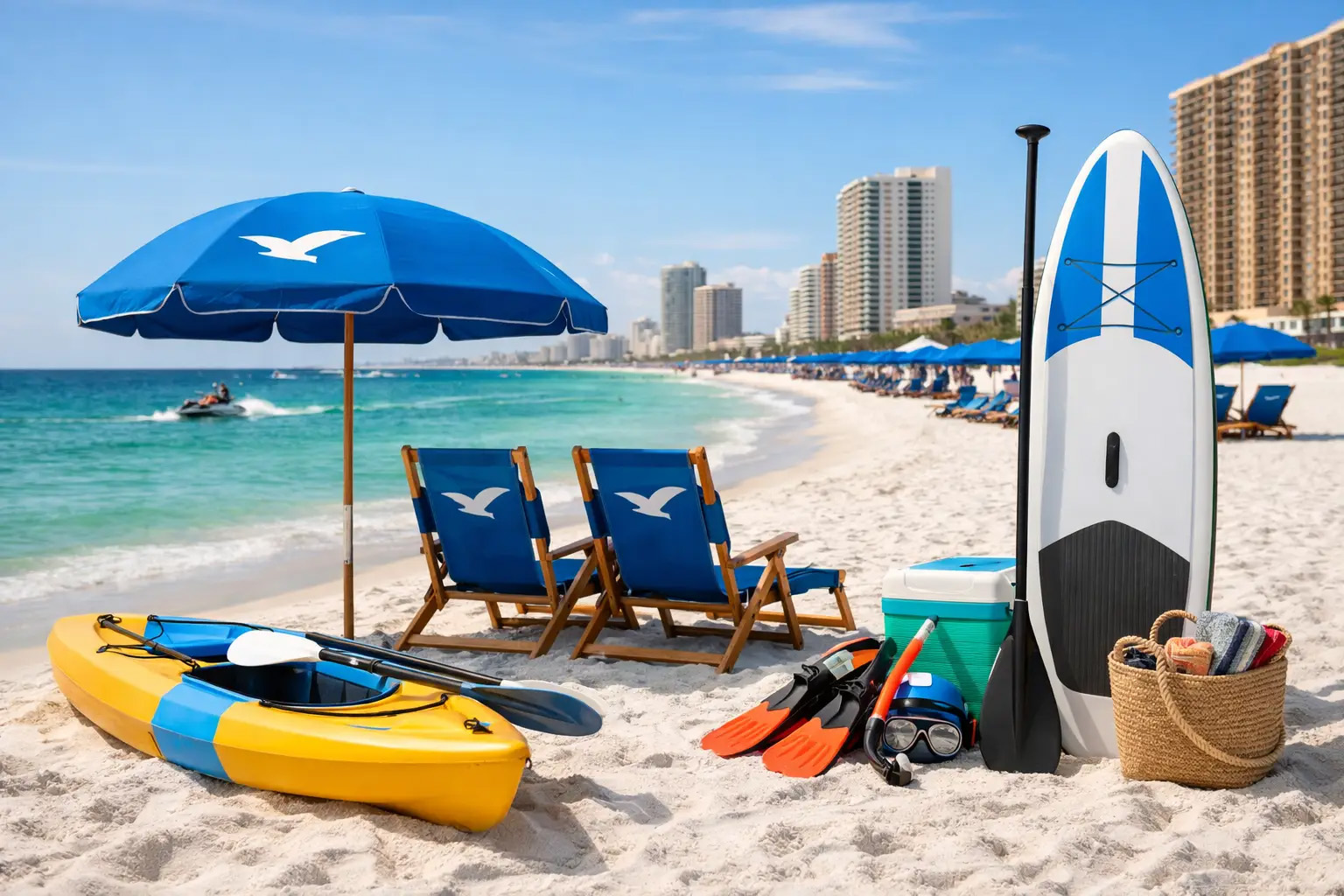
The difference between a relaxed beach day and a frustrating one often comes down to the first hour. Families who arrive with shaded seating, dry towels, cold drinks, and a plan for the kids can settle in quickly. Those who arrive carrying too much or searching for supplies during a busy week can lose valuable vacation time. Renting beach gear in Panama City Beach gives some visitors a practical way to travel lighter while still enjoying the shoreline comfortably.
A rental can solve a real vacation problem, but the right choice depends on your group, your accommodations, and how you plan to use the beach. A couple spending two quiet mornings by the water needs something very different from a family with young children, a cooler full of lunches, and a full afternoon ahead.
Start With Your Beach-Day Plan
Before you reserve anything, decide what a successful beach day looks like for your group. Consider how many people need a seat, how long you expect to stay, whether anyone needs extra shade, and how far you will walk from your vacation rental to the sand. These details help you avoid paying for gear that adds little value or arriving without something you genuinely need.
For many guests, chairs and an umbrella or canopy form the foundation. They create a comfortable home base for reading, resting, watching children near the shoreline, and taking a break from direct sun. If you plan to spend several hours on the beach, shade matters more than you might expect, especially during the warmest part of the day.
Families often benefit from adding a cooler, beach cart, boogie boards, or sand toys. A cart can make a significant difference when your rental is across the street, behind a dune walkover, or several buildings from the beach. On the other hand, guests staying directly on the Gulf may prefer a simpler setup and fewer items to manage.
Know the Difference Between Beach Service and Gear Delivery
Not every beach rental operates the same way. Some providers set up chairs and umbrellas in a designated area of the beach. Others deliver equipment to your vacation rental, where you take it to the sand and return it as directed. Both options can work well, but each requires different planning.
A staffed beach-chair setup at the complex where you are staying offers convenience. You can arrive, check in with the service, find your chairs, and begin your day without carrying equipment. This option often suits guests who want a polished, low-effort beach experience. Availability, location, and daily operating conditions can affect these setups, so confirm the details before you count on a particular row or location. Typically, the guest will be paying for this service but, a few vacation rentals include this service in the price. Be sure to check so there are no surprises. You can usually reserve beach chairs in advance to be sure you will have a place upon arrival.
Delivered gear gives you more flexibility. You may use the equipment at different beach access points or bring it to a quieter stretch of sand. However, delivery rentals place more responsibility on you. Confirm where the provider will leave the items, where you should store them overnight, and when the provider will collect them.
Ask About Access Before You Reserve
Panama City Beach includes a mix of beachfront condominiums, vacation homes, resort properties, and neighborhood access points. Your lodging location affects which gear arrangement makes the most sense. A beach-service provider may work from a particular beachfront area, while a delivered setup may require you to carry items through an access point.
Review your property’s parking, beach access, storage space, and community rules before you reserve larger equipment. Some properties limit where guests can place gear, and they do not offer convenient space for storing bulky items overnight. Panama City Beach operated under a "No Trace Left Behind" ordinance that requires all beach gear be removed from the beach each evening. A quick check protects you from an avoidable inconvenience after check-in.
Reserve Early for Peak Travel Dates
Spring break, summer holidays, long weekends, and major events bring more visitors to the beach. During these periods, popular chair setups, umbrellas, golf carts, bicycles, and family-sized equipment can sell out early. Last-minute rentals may still be available, but you may have fewer choices, less convenient delivery windows, or a higher price.
Reserve as soon as you know your travel dates if particular beach gear is important for your vacation plans. This approach matters most for groups that need several chairs, a large canopy, mobility equipment, or specialty items for children. Confirm the reservation in writing and keep the provider’s contact information available before arrival.
Price deserves attention, but it should not control the entire decision. Compare the rental period, delivery fees, service area, deposit requirements, weather policies, and replacement costs. A lower daily rate can become less attractive if it adds a delivery charge, requires a long pickup trip, or creates a difficult return schedule on your departure day.
Choose Gear That Fits the Weather, Not Just the Photo
A wide umbrella and matching chairs may look ideal in a listing photo, but coastal weather requires practical judgment. Wind can change quickly along the Gulf, and a lightweight setup that works on a calm morning may not suit a breezy afternoon. Ask how the provider handles wind restrictions and whether staff may close or remove umbrellas when conditions become unsafe.
Do not treat rented shade equipment as a substitute for weather awareness. Check the beach flag conditions each day, supervise children near the water, and respond quickly to changing surf or storms. Beach gear should make the day more comfortable, not encourage your group to stay exposed to unsafe conditions.
The same principle applies to water equipment. Boogie boards, paddleboards, kayaks, and similar items can add fun for confident swimmers in suitable conditions. They require more attention than chairs or toys, however. Consider your group’s experience, the day’s surf, and the effort required to transport and supervise the equipment.
Keep Children Comfortable Without Over-packing
Parents often feel tempted to rent every possible item for a beach day. In practice, a focused setup usually works better. Shade, drinking water, sunscreen, snacks, towels, and a few familiar toys cover the essentials for most young children. Add chairs or a wagon if they improve comfort or reduce the number of trips you need to make.
Very young children may need frequent shade breaks, dry clothing, and a quiet place to rest. Plan for those needs before you commit to a long stretch on the sand. A comfortable child makes the entire group’s day easier.
Read the Rental Terms Before Delivery Day
Rental terms deserve more than a quick glance. Confirm the rental start and end dates, expected delivery time, pickup procedure, and instructions for damaged or missing items. If you book a multi-day rental, find out whether the provider expects you to secure the gear overnight or whether they handle daily setup and removal.
Also ask about weather cancellations. Providers vary in how they handle high winds, heavy rain, or beach closures. Some may offer a credit or adjustment under certain circumstances, while others may not. Clear expectations reduce friction if conditions change after you arrive.
Take a few moments to inspect delivered equipment when it arrives. Check chairs, wheels, straps, coolers, and water equipment for visible damage. If anything looks unusable or incomplete, contact the provider promptly. Early communication gives the company a fair chance to correct the issue and documents the condition of the equipment.
Match the Rental to the Rest of Your Vacation
Beach gear should support your plans rather than dictate them. Guests who intend to explore restaurants, attractions, and nearby activities may want a compact, one-day setup. Guests who plan to spend most mornings and afternoons on the sand may receive more value from a multi-day chair and umbrella arrangement.
Think about your departure day as well. If checkout requires an early start, avoid rentals that require a complicated return process or a narrow pickup window. A clear plan lets you enjoy your final morning instead of managing equipment logistics.
The best rental choice rarely involves the most gear. It involves the gear your group will actually use, delivered or set up where you need it, with terms you understand before you arrive. When you make those decisions early, the beach can feel less like a project and more like the reason you came.
Renting Baby Gear in Panama City Beach
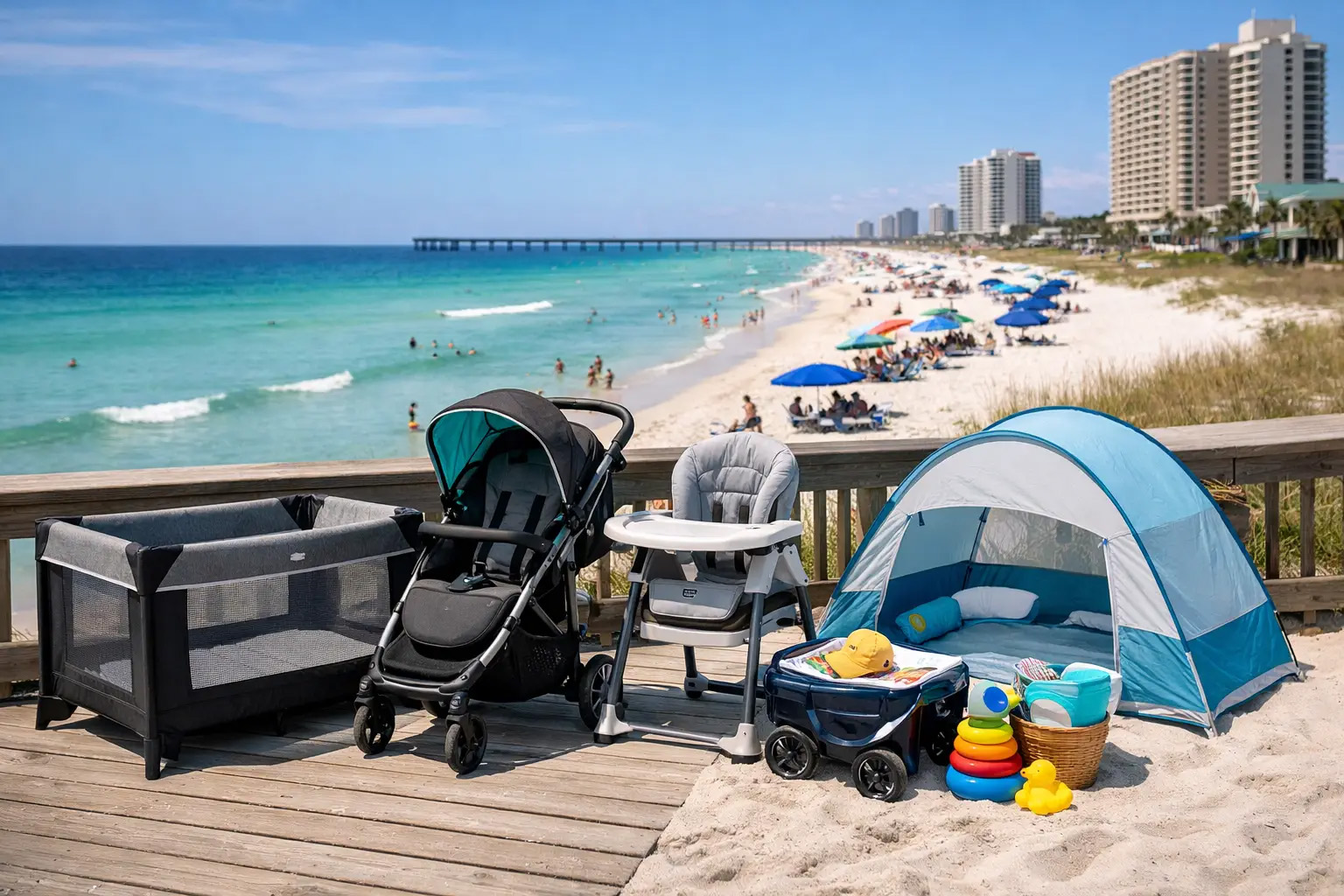
A stroller piled with beach towels, a portable crib, a high chair, and a car seat can turn a family getaway into a complicated packing exercise before the trip even begins. Renting baby gear in Panama City Beach can reduce that load, but families should make decisions based on safety, sleeping needs, transportation plans, and the equipment already available at their vacation rental.
The right approach does not mean renting everything. It means bringing the items your child relies on most, confirming what your accommodations provide, and reserving only the gear that will make the week easier.
Renting Baby Gear in Panama City Beach: Start With Your Stay
Review your vacation rental details before you contact a baby gear provider. Some homes and condos offer a crib, pack-and-play, high chair, or stroller, while others do not. Amenities vary by property, and families should never assume that a listing includes infant equipment simply because it welcomes children.
Ask specific questions before arrival. Confirm the type of sleep space, the high chair style, and whether the property provides linens for a crib or pack-and-play. If you plan to use a stroller, consider the property layout as well. A beachfront high-rise may involve elevators, parking garages, and longer walks to the sand. A beach house may offer more room for gear but include stairs or a sandy walkway.
A quick inventory prevents duplicate rentals and gives you time to plan around your child's routine. For example, a family with a baby who sleeps well in any familiar sleep sack may only need a safe rental crib. A toddler who uses a specific booster seat at every meal may do better with that item packed from home.
Choose Gear Based on the Moments That Matter
Families often rent gear because they picture every possible need. A better plan starts with the parts of the day where equipment solves a real problem.
For sleep, prioritize a safe, age-appropriate crib or pack-and-play with a firm mattress that fits correctly. Babies need a clear sleep space. Do not add pillows, loose blankets, padded inserts, or soft toys to compensate for an unfamiliar room. Bring familiar sleep clothing, such as a sleep sack, when it supports your child's normal routine.
For meals, a full high chair can make sense for a baby who eats several meals a day at the rental. A compact booster may work better for an older toddler, particularly in a condo with limited dining space. If your child has food allergies, pack or purchase the cleaning supplies and familiar utensils you need rather than relying on equipment you have not inspected.
For outings, think beyond the beach. A stroller helps with evening walks, visits to Pier Park, and trips from a parking area to the shoreline. However, a lightweight umbrella stroller may struggle in deep sand. A wagon or all-terrain stroller can handle beach access more effectively, but it takes up more space and may not fit easily in every elevator, vehicle, or rental entryway.
For the beach itself, a shaded play space, portable fan, or beach cart may help during long afternoons. These items offer convenience, not necessities. Panama City Beach sun and heat require closer supervision than any piece of gear can provide. Plan beach time around naps, bring water for adults and older children, and use shade and protective clothing as part of a practical sun plan.
Treat Safety Checks as Non-Negotiable
A rental provider should be able to explain how it cleans, inspects, and maintains each item. Ask when the company last checked the equipment, whether it follows manufacturer instructions, and how it handles product recalls. A provider that cannot answer basic questions about condition and cleaning does not deserve your business.
Inspect every item when it arrives. Check for cracked plastic, loose screws, frayed straps, missing hardware, sharp edges, and unstable legs. Test brakes on strollers and wheels on cribs or play yards. Confirm that a high chair restraint works and that the tray locks securely. If anything looks damaged, incomplete, or poorly cleaned, request a replacement before you use it.
Car seats require an even higher standard. Many parents prefer to bring their own car seat because they know its history, fit, and expiration date. If you rent one, make sure the provider can confirm that the seat has never been in a crash, has not expired, includes all required parts and labels, and comes with the manufacturer's instructions. Install it carefully in the vehicle you will use, and do not accept a seat that you cannot install correctly.
Families should also avoid using older hand-me-down equipment supplied informally by a host, friend, or neighbor unless they can verify its condition and current safety status. Product standards change. A familiar-looking item may no longer meet current guidance.
Reserve Early, Then Confirm the Details
Baby gear inventory can tighten during peak travel weeks, especially when several families arrive on the same Saturday. Reserve essential items as soon as you finalize your accommodations and travel dates. Cribs, full-size strollers, and beach wagons often require more advance planning than small accessories.
Before you reserve, confirm the total cost, delivery area, delivery window, pickup timing, damage policy, and cancellation terms. Ask whether the company delivers inside the rental, leaves items at the door, or requires an adult to meet the driver. That detail matters when your check-in schedule includes grocery shopping, flight delays, or a tired child who needs bedtime immediately.
Measure when size matters. A full-size crib may not fit comfortably in a small bedroom, and a large stroller may create an obstacle in a narrow condo entry. If you rent a multi-level home, ask whether the provider offers gates or whether you should bring your own portable safety solutions. Do not improvise with unsuitable barriers around stairs, pools, balconies, or doors.
Pack the Items That Are Hard to Replace
Rental gear works best when it takes care of needs for bulky equipment. Bring the personal items that support comfort, hygiene, and medical needs. A favorite sleep sack, pacifier, baby monitor, bottles, formula supplies, medications, and prescription items belong in your travel plan, not in a last-minute search after arrival.
Keep a small first-day bag with diapers, wipes, a change of clothes, feeding basics, and bedtime essentials. Delivery schedules can shift, check-in may run late, and a child does not adjust their needs to a vacation timetable. This bag gives your family a calm first evening even if the rest of your groceries or gear arrives later.
You may also want to pack a compact carrier. A carrier does not replace a stroller, but it can make a boardwalk walk, restaurant wait, or airport transfer much easier. It also gives parents an option when sand makes wheels impractical.
Match the Plan to Your Child, Not the Packing List
An infant, a newly mobile baby, and a preschooler create very different travel needs. A family traveling with an infant may value a dependable sleep setup above all else. Parents of a toddler may care more about a high chair, stroller, and childproofing around a new space. Families with older children may need little more than a booster and a way to transport beach supplies.
Length of stay also changes the calculation. For a long beach vacation, a quality stroller and high chair may earn their cost every day. For a two-night visit, bringing a few compact essentials may cost less and reduce coordination. Consider how often you will use each item, not just whether it sounds useful.
The goal is not to recreate every corner of home. It is to create a safe, manageable vacation environment where parents can spend less time hauling equipment and more time enjoying the shoreline, poolside breaks, and unhurried family dinners. Reserve the gear that supports that plan, inspect it carefully, and leave room in the car and the schedule for the moments you came to enjoy.