
Parking
Panama City Beach Parking Guide
Parking in Panama City Beach is generally fairly easy to deal with during most of the year. Summer months and large festivals are the exception to this generalization. If you are staying in one of Emerald Beach Properties vacation rentals, you'll have parking available at your vacation rental that is usually very convenient to the beach.
If the resort where you are staying allows you to have fewer parking spaces than the vehicles you are bringing or if you want to bring a trailer or boat, you'll need to make arrangements for those excess items in advance to avoid problems upon arrival. Talk with your reservations representative for assistance with this.
When you leave your vacation rental to visit festivals, attractions, restaurants, etc. you may have some issues depending on the time of year. This Panama City Beach parking guide helps you make a practical plan before you leave your vacation rental, so parking supports the day rather than controls it.
Parking conditions in PCB change with the season, weather, holiday weekends, special events, and time of day. Treat posted signs, lot instructions, and current payment information as the final authority when you arrive.
Start With Your Beach Access Point
Panama City Beach has miles and miles of beach, but not every section offers the same parking setup. Public beach access points provide limited roadside or some lot parking, while larger access areas, parks, and activity areas can offer more capacity. The right choice depends on what you plan to carry and how far you want to walk.
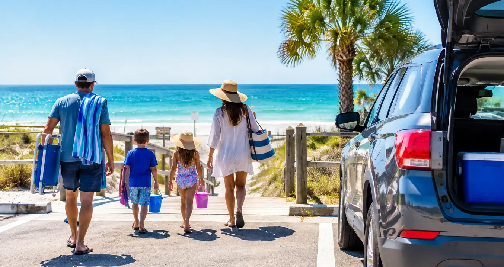
Families hauling chairs, umbrellas, beach carts, and snacks should prioritize access over the closest possible address. A space several blocks from the sand or your event may work well for two adults carrying only towels. It can create a difficult start for a group managing young children or those with special mobility needs. Review the access point and parking available before you head out and decide how much walking your group can comfortably handle.
Your vacation rental location also matters. Guests staying near the beach may find that walking, biking, or using a local ride service makes more sense than going in their own vehicle during the busiest hours. Emerald Beach Properties encourages guests to consider the full day’s plan before driving - especially when the beach, restaurants, and evening activities sit within a manageable distance.
Public Access Lots and Street Parking
If you are headed out to a different stretch of beach than the one adjacent to your vacation rental, you'll need to look for parking at your target location Public beach access parking can offer a straightforward route to the sand, but availability often disappears early on popular days. Follow all posted time limits, payment instructions, and designated-space markings. Do not assume a curbside spot allows beach parking simply because other vehicles occupy it.
Street parking requires extra attention. Signs may restrict parking near intersections, driveways, fire hydrants, construction areas, loading zones, or emergency access routes. A quick check of the sign can prevent a tow, citation, or long walk back after dinner. Never block residential driveways, condo entrances, bike lanes, or pedestrian crossings.
If you use a paid public lot, take a photo of your space number and payment confirmation. That small step helps if you need to verify where you parked or resolve a payment issue later.
Understand the Trade-Offs at Major Beach Areas
The most convenient areas often draw the largest crowds. Parking near Pier Park, major restaurants, popular public accesses, and event venues can fill quickly during spring break, summer weekends, holiday weeks, and sunset dining hours. A paid lot may offer more dependable capacity, but it can also place you in heavier vehicle and pedestrian traffic when everyone leaves at once.
Arriving early remains the simplest strategy. For a prime beach day, aim to park before midmorning rather than around noon, when many visitors begin searching at the same time. If your schedule allows, another smart option involves arriving later in the afternoon. Many daytime beachgoers leave before sunset, and you can enjoy cooler sand, dinner, and an evening walk with less competition for spaces.
Do not circle the same block repeatedly once an area reaches capacity. That approach wastes time, increases frustration, and adds traffic near beach crossings. Choose a backup access point before you head out. A five- to ten-minute drive to another public access can save far more time than waiting for an unavailable spot near your first choice.
Pier Park and High-Traffic Districts
Pier Park attracts visitors for shopping, dining, entertainment, beach access, and seasonal events. That combination makes it convenient, but it also means parking demand does not follow a single beach schedule. A rainy afternoon can create crowded garages and lots if visitors move from beach activities to restaurants, movie theaters and stores.
When you park in a commercial area, confirm whether the lot serves customers only, whether time limits apply, and whether overnight parking is prohibited. Businesses and private lot operators can enforce their rules. A space that looks open may not authorize all-day beach parking.
Plan extra time when you visit during a concert, festival, sporting event, or holiday program. Event traffic alters normal travel patterns, and lot access may change without advance notice. If an event matters to your group, arrive early, expect a longer exit, and keep water & snacks in the car for the wait afterward.
Check Your Vacation Rental Parking Before Arrival
Your rental’s assigned parking will provide the most reliable base for your vehicle, but every property operates differently. Some homes offer driveways, while condominiums may use numbered spaces, parking passes, garages, registration systems, height limits, or separate overflow areas. Review your arrival information before you reach the property. When in doubt, call or text Emerald Beach Properties with your questions and we'll get right back with you.
Confirm how many vehicles your reservation allows. This matters for multigenerational trips, teen drivers, friends arriving separately, and guests who rent golf carts or larger vehicles. Most condo associations do not allow rental golf carts or scooters on their property so, be sure to check in advance. Do not count on unmarked spaces or neighboring areas as overflow parking. This is due to limited parking spaces and liability concerns. Property managers and associations enforce parking rules to keep access clear for owners, guests, service teams, and emergency vehicles.
Large trucks, trailers, campers, and boats need special planning. Many vacation rental communities restrict them because of space constraints, vehicle length, or local rules. Ask before arrival if your group plans to bring anything beyond standard passenger vehicles. Solving that question in advance protects your first afternoon from an avoidable parking problem.
Plan for State Parks, Marinas, and Day Trips
A beach vacation often includes more than one stretch of beach. St. Andrews State Park, marina areas, fishing charters, Shell Island excursions, and scenic drives can each have different entry procedures and parking expectations. These destinations may charge entrance or parking fees, limit capacity, or close vehicle access when lots fill up.
For a state park day, arrive early and prepare for a longer stay. Pack water, sunscreen, identification, and payment options before you enter the line. For charter and excursion departures, confirm exactly where the operator wants guests to park. Marinas often have working docks, commercial traffic, reserved spaces, and loading zones that require clear access.
If you plan a day trip outside the immediate beach area, avoid leaving valuables visible in your vehicle. Store bags, electronics, and beach gear out of sight before you park, not after you arrive at the lot. A locked vehicle and a clean interior reduce temptation and let you enjoy your outing with fewer concerns.
Use Smart Habits on Busy Days
The best parking plan combines preparation with flexibility. Save the address of your intended access point, but also save two alternatives. Keep your phone charged, bring a card or mobile payment method for paid lots, and carry a small amount of cash only if you prefer it for incidentals. Some lots rely on apps or digital kiosks, and cellular service can slow down when large crowds gather.
Before you leave the vehicle, check for more than a vacant space. Look for posted lot hours, towing warnings, payment deadlines, accessible parking instructions, and signs that identify private property. Accessible spaces require a valid placard or plate. Fire lanes, marked emergency routes, and loading zones never serve as temporary parking, even when the beach crowd feels overwhelming.
At the end of the day, give everyone a clear meeting point before you separate. Crowded lots look different after dark, particularly when families return tired and sun-soaked. Save your parking location on your phone, photograph nearby landmarks, and keep keys with the adult who will return to the vehicle.
A little planning gives your group more time where it belongs: feet in the sand, children chasing the tide, and dinner plans that do not depend on finding one last open space. Choose your access point early, respect each lot’s rules, and let a backup plan carry the day when the first choice fills up.