
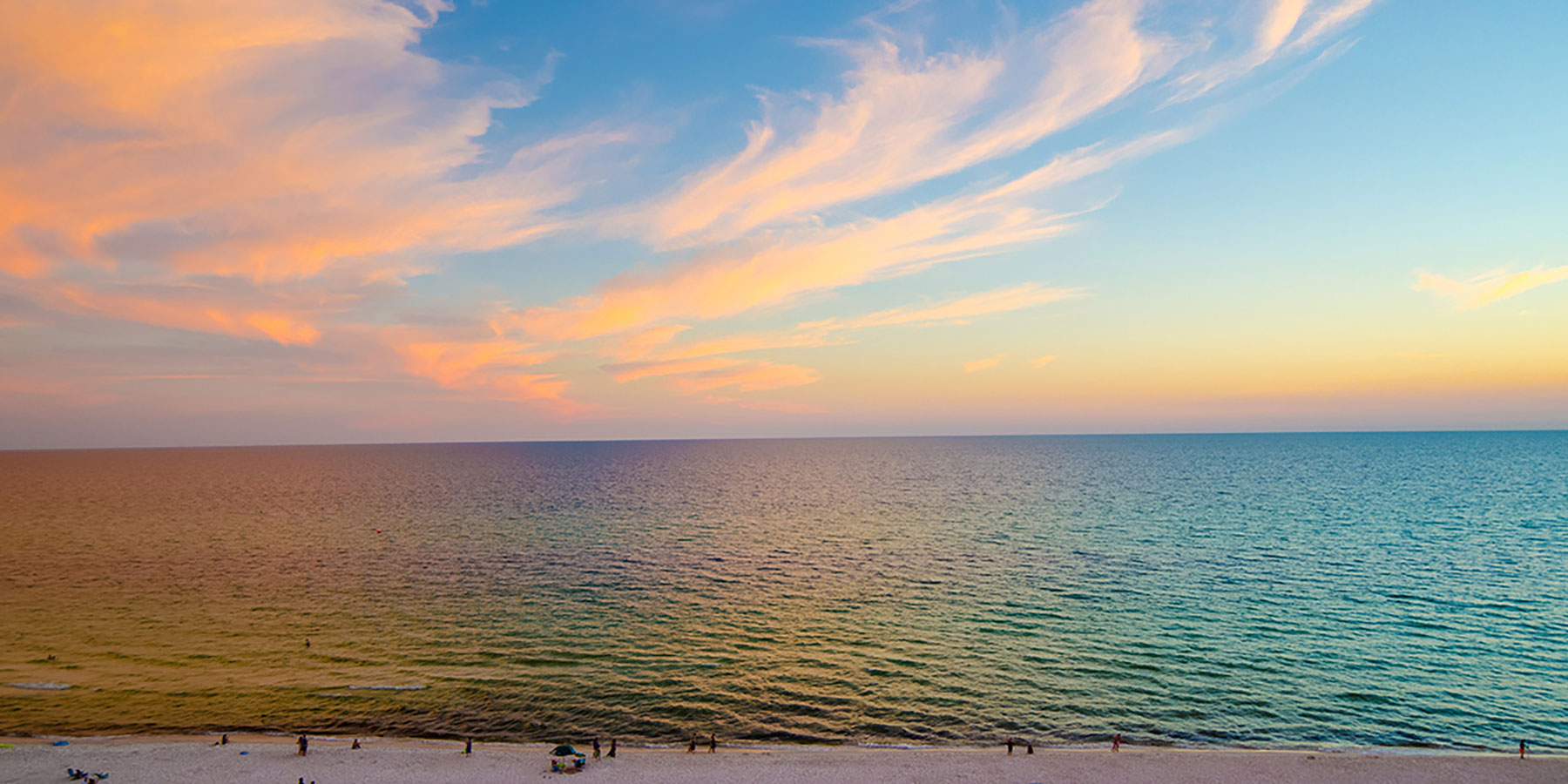
Sea Turtle Hatching Season in PCB
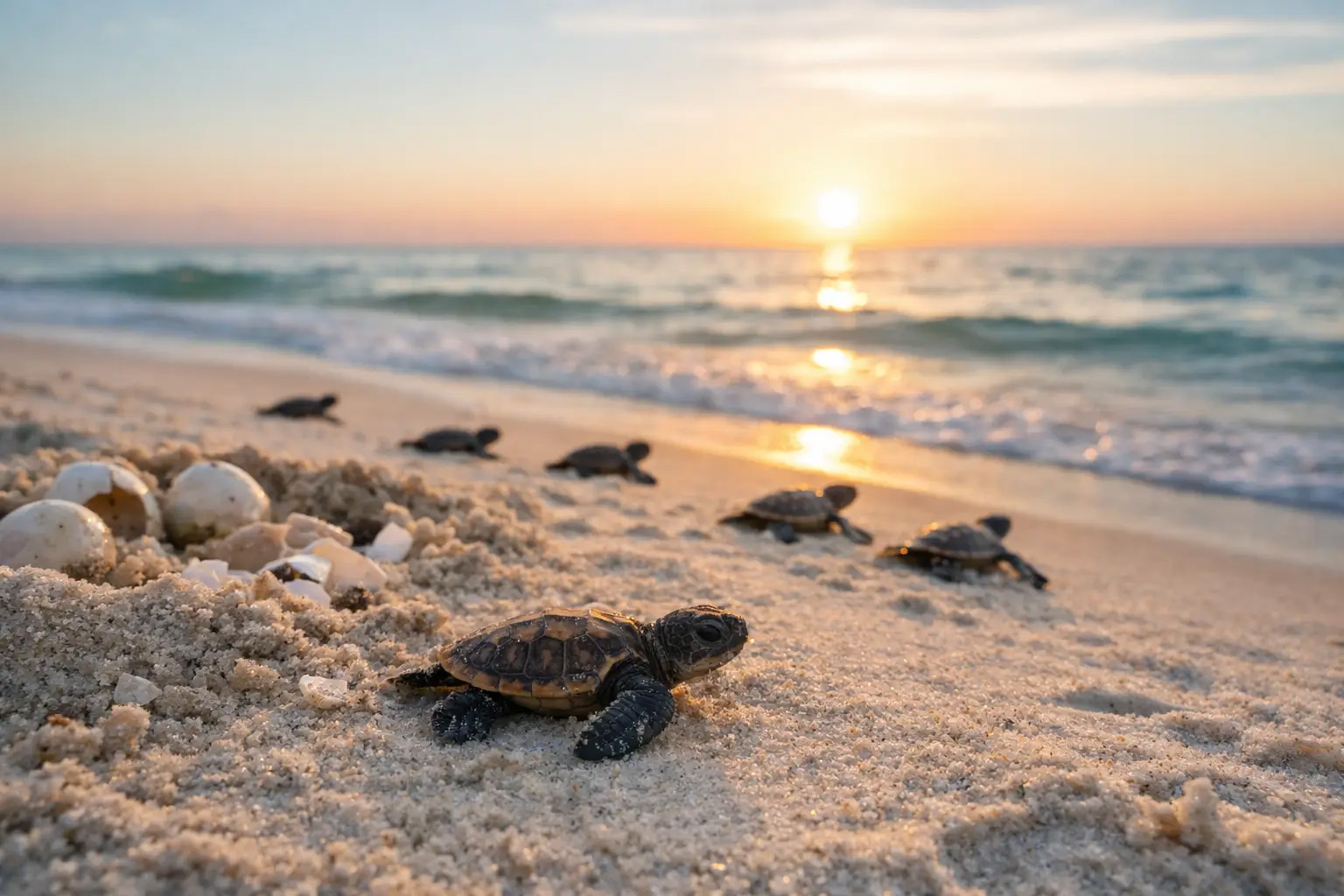
A late-evening walk on the beach can feel quiet and routine until you notice a marked nest in the sand or a small track line heading toward the Gulf. During sea turtle hatching season in Panama City Beach, FL, those details matter. They change how everyone should use the beach, especially after dark, and they give families a rare chance to share the shoreline with one of Florida’s most beautiful wildlife events.
This is not just an interesting seasonal occurrence. It's a protected event on the beach. It affects lighting, beach setup, nighttime behavior, and even where you stand if you see hatchlings emerge. You should be prepared to respect the turtles and protect the experience that makes a coastal stay such a wonder.
For more information about PCB Turtle season visit Panama City Beach Turtle Watch's website. This site shows where current nests are located and gives lots of great information on the sea turtles nesting and hatching process. Also you can find out when hatched nests will be excavated to see how many eggs there were and to estimate how many hatchlings there were in each nest.
When sea turtle hatching season in PCB happens
In Panama City Beach, sea turtle activity generally begins in the warmer months, with nesting season starting around May and running through October. Hatching season overlaps that window and is typically most active from roughly July through October, when incubated nests begin to open and hatchlings make their way to the water.
The exact timing is never guaranteed. Weather, sand temperature, storm activity, and the date a nest was laid all affect when hatchlings emerge. Some nests hatch at night with little warning, while others take longer than expected. That uncertainty is part of why beach rules during this period are taken seriously.
Most hatchlings emerge after dark or in the very early morning hours. They rely on natural light cues, especially the brighter horizon over the Gulf, to orient themselves. Artificial light from condos, balconies, flashlights, and phones can confuse them and pull them inland, where their survival odds drop dramatically.
Why this season changes the beach experience
Sea turtle hatching season in PCB does not mean beaches are closed or that you need to avoid the shoreline. It means the beach should be used with a little more care. The difference is simple but important.
Daytime visitors must take notice of posted nest markers, usually set back from the waterline in protected areas. These should never be disturbed, moved, or treated as photo props. They mark active nests monitored under wildlife protection guidelines by the PCB Turtle watch group.
At night, the most noticeable change is lighting. Exterior lights visible from the beach can interfere with hatchlings. That includes bright balcony lights, decorative string lights, and the glow from open drapes facing the shore. For guests staying in beachfront properties, this is one of the most practical adjustments they can make. Condos are required to use turtle lights which are not very bright on balconies and some condos have chosen to disable their balcony lights during this time to make sure the hatchlings are not distracted.
It also affects beach gear. Chairs, tents, toys, and holes left in the sand create obstacles for nesting females and hatchlings. What feels minor to a us can become a real barrier to wildlife movement. During hatching season, clean beach habits are not just courteous - they are part of responsible coastal use. In PCB there is a Nothing Left Behind Ordinance in place that requires us to remove all of our beach gear from the beach every evening.
What visitors should do if they see a nest or hatchlings
The right response is controlled and simple. Give the area space. Do not touch hatchlings. Do not use flash photography. Do not shine a phone light or flashlight toward them. Keep noise and movement low, especially if children are nearby and excited.
If hatchlings are actively moving toward the water, let them do so without interference. People often want to help, but handling them can do more harm than good and violates wildlife protection laws in Florida. If a hatchling appears disoriented, trapped, or at risk, the correct step is to alert the appropriate local wildlife or beach patrol authority rather than improvising.
If you encounter a marked nest that looks disturbed, the same principle applies. Report it. Do not investigate it yourself. Sea turtle nests are monitored for a reason, and unnecessary contact can damage eggs or alter the site.
For families, this can still be a meaningful experience. In fact, it often becomes one of the most memorable parts of a beach trip. The key is setting expectations early. Watching from a respectful distance is the experience. Interacting is not.
Practical guidance for guests staying near the beach
Guests in gulf-front or gulf-view rentals should treat nighttime lighting as the first priority. Close curtains after dark if interior lighting is bright and visible from the beach. Turn off balcony lights when not needed. If outdoor lighting must remain on for safety, lower intensity and shielded options are better than broad, bright illumination. If you are walking on the beach at night, a red light flashlight is very helpful to preventing light that will disturb the nests and hatchlings.
The second priority is beach setup and cleanup. Remove chairs, umbrellas, and toys each evening. Fill in holes before leaving. Flatten sand structures that could block hatchlings overnight. These are small steps, but they directly reduce risk.
The third is awareness. During turtle season, it helps to assume that any dark stretch of beach may be active habitat. That does not require constant worry. It just requires better habits from all of us.
This is especially relevant for visitors traveling with children. Kids are naturally curious, and that curiosity can be a positive part of the trip if it is guided well. Explain in advance that marked nests are protected areas, and that nighttime beach walks need to stay calm and low light. Clear expectations usually prevent the problems that start with excitement and poor visibility.
The trade-offs guests should understand
There is a practical trade-off during hatching season. Some nighttime habits that feel normal on vacation may need to be scaled back. A brightly lit balcony dinner, flashlight-heavy beach walks, or leaving gear out for sunrise convenience may not be the right call when active nests are nearby.
That said, most guests do not experience this as a burden once they understand the reason. If anything, it gives the trip more context. Panama City Beach is not just a place with water views and great vacation attractions. It is active coastal habitat. Respecting that habitat is part of using the shoreline responsibly.
There is also an economic reality behind this. Protected beaches, healthy wildlife patterns, and well-managed guest behavior all support the long-term appeal of a the beach.
A better way to experience the season
The best approach is not to chase a hatchling sighting. It is to stay aware, follow the rules, and let the season unfold naturally if you happen to witness part of it. Most guests will never see a nest hatch, and their vacation will still benefit from knowing the beach is being protected properly.
For others, a quiet moment on the sand, watching from a distance as hatchlings orient to the water, becomes the story they bring home. Not because it was staged or crowded or turned into entertainment, but because it was real and handled the right way.
That is the standard worth keeping during sea turtle hatching season in PCB. Use the beach, enjoy the shoreline, and make the small decisions that protect what brought you there in the first place.
Posted on 06/12/2026 in Beachfront, Emerald Beach Properties, Panama City Beach, Vacation Rentals # Beach, Emerald Beach Properties, Panama City Beach, Sea Turtles, Wildlife