


Recently Viewed
Favorites

Safety While on Vacation

July 30, 2026

Guest Booking Safety Guide for Beach Vacations

A beach vacation should begin with the sound of waves and a confirmed reservation and all the info you need to check in for a great stay, not a last-minute message asking for another payment. A careful guest booking safety guide gives you a practical way to assess a rental before you share personal details, submit funds, or pack the car for Panama City Beach.

Most booking problems follow familiar patterns: a traveler responds to a copied listing, pays outside an approved process, or ignores details that do not match the property or the rental agreement. You can avoid many of these issues by slowing down at the right points. A few minutes of verification protects your vacation budget, your information, and your peace of mind.

Start With a Rental You Can Verify

A legitimate vacation rental should give you enough information to make an informed decision. Look for clear, current photos; a complete description; an identifiable property location or location details appropriate to the booking process; a published cancellation policy; and a direct way to reach the management team. Professional managers answer specific questions about the home, amenities, parking, occupancy limits, and check-in procedures.

Photos deserve more than a quick glance. Look for consistency across rooms, furniture, views, and exterior features. A listing that shows a gulf-facing balcony should explain the unit’s building, floor, or view category. If a photo promises a private pool, confirm whether the pool belongs to the home, the community, or a nearby resort area. Small distinctions matter when your group plans around a particular feature.

Read recent guest feedback but use your own judgment. Reviews can show how a manager handles cleanliness, maintenance, noise, check-in, and questions during a stay. One negative review does not automatically signal a problem. Instead, look for patterns and consider whether the manager responds professionally and addresses legitimate concerns.

A direct booking can offer clear communication and property-specific support, but it also places more responsibility on the guest to confirm who operates the site. Check that the company identifies itself consistently in its website, email address, rental agreement, and payment instructions. A business that changes names, contact details, or payment recipients without explanation deserves closer scrutiny.

Guest Booking Safety Guide: Questions to Ask Before You Pay

Ask practical questions before payment, especially when a listing leaves room for interpretation. Confirm the total cost, including cleaning fees, booking fees, taxes, damage waiver fees, resort fees, parking charges, and pet fees if applicable. Ask what the quoted rate includes and whether the manager expects any payment after you book. There are usually resort fees for parking and amenities that must be paid to the resort outside of the reservation so be sure you understand that part of the reservation. These can be paid online in advance or at check in.

You should also confirm the exact property or unit type. In large beachfront buildings, a unit may face the beach, overlook a pool, or be located on the opposite side of the building. A description such as "beach access" does not always mean a direct beach view. Ask about the walking route, elevator access, parking arrangements, and any wristband or gate requirements.

For families, confirm bed configurations rather than relying only on the listed number of bedrooms. Ask whether bunk beds suit your children, whether a sleeper sofa provides a practical sleeping option. Guests with mobility needs should ask about stairs, elevator reliability, doorway width, shower access, and the distance from parking to the unit.

Keep these conversations in writing whenever possible. Written confirmation gives both sides a clear record of what the manager represented before your stay. It also helps you spot conflicting information before a small misunderstanding turns into a dispute later on.

Use Payment Methods That Protect You

Payment instructions should match the booking channel and the management company you verified. Use the secure payment process the company provides, and save confirmation emails, receipts, and the signed rental agreement. Review the merchant name that appears during checkout. If it differs from the company you contacted, stop and ask why before you complete the transaction.

Treat pressure as a warning sign. A manager may have legitimate deadlines during a busy travel period, but a demand for immediate payment through gift cards, cryptocurrency, wire transfers to an unrelated individual, or peer-to-peer payment apps should alert you to pause. Those methods often offer limited recovery options and give you less documentation if a dispute arises.

Never send a card number, government identification, or other sensitive information through an unverified text message, social media message, or unfamiliar email address. A legitimate company may need identity verification or a signed agreement, particularly for age requirements and fraud prevention. Confirm the request through a phone number or contact method you independently locate on the company’s official website before you send anything.

Public Wi-Fi adds another consideration. Avoid entering payment details while connected to an open network at an airport, coffee shop, or hotel lobby. Use a trusted connection, confirm that the browser shows a secure checkout page, and log out when you finish. These steps do not replace a secure booking system, but they reduce unnecessary exposure. This is true for any online transaction, not just for vacation rentals.

Read the Agreement Before the Arrival Date

The rental agreement sets the operating rules for your reservation. Read it before you make a final payment, not while you wait in the parking lot on check-in day. Focus on cancellation terms, payment schedules, occupancy limits, age requirements, pet rules, smoking restrictions, check-in and checkout times, and the manager’s damage policy.

Pay close attention to clauses that affect a beach stay. Some properties limit trailers, golf carts, motorcycles, oversized vehicles, or boat parking. Others require guests to register vehicles, wear amenity bands, or follow quiet-hour rules. A property manager cannot waive association rules, and a guest who ignores those rules may face fines, lose access to amenities or may even be asked to leave the property for very serious violations.

Weather also deserves a realistic plan. Florida beach conditions can change quickly, and tropical systems can affect travel plans even when a property itself remains available. Understand the cancellation policy and consider travel protection insurance based on your trip cost, flexibility, and tolerance for risk. No policy fits every traveler. A family traveling during peak hurricane season may value broader coverage more than a couple with flexible dates.

Protect Your Group During the Stay

Safety continues after the reservation confirmation. Share the property address, management contact information, and travel schedule with someone outside your group. Save important details on your phone and keep a backup copy available in case you lose service or battery power.

When you arrive, inspect your vacation rental with care. Note any existing damage, missing items, or cleanliness concerns and report them promptly through the manager’s approved communication channel. Take date-stamped photos when appropriate. Early reporting protects you from confusion later and gives the manager an opportunity to address a legitimate issue.

At a beach property, supervise children around balconies, pools, elevators, and water access. Follow posted pool rules, heed beach flag warnings, and keep doors secured when children could reach an exterior area. Panama City Beach offers beautiful water and broad stretches of sand, but currents and surf conditions demand attention. A calm-looking beach with gentle waves can change fast.

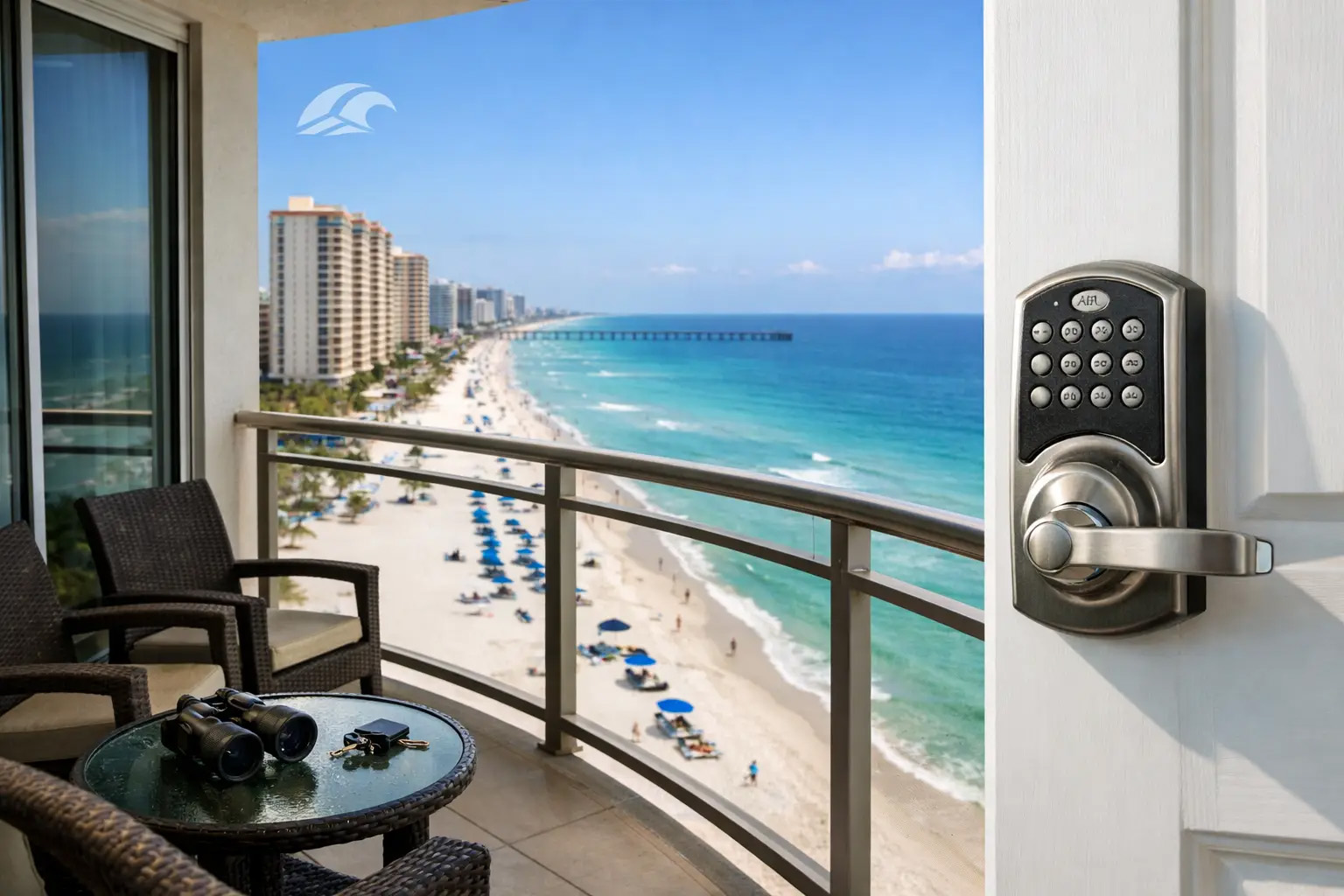
Do not share door codes, gate credentials, or unit access instructions publicly. Treat them like a house key. Keep them within your traveling group, and contact the manager your rented from rather than trying to solve an access issue through a stranger in the building or a social media post.

Know What to Do When Something Feels Wrong

Trust specific facts, not just a general feeling. A mismatched payment recipient, a sudden request to move communication off the official channel, missing reservation details, or an instruction to pay again without documentation all justify a pause. Contact the management company through a verified phone number or website contact method. Do not reply only to the message that raised the concern.

If you believe someone has misused your payment information, contact your card issuer immediately and document the dates, amounts, messages, and names involved. If an issue arises at the property, report it to the manager first and follow any emergency instructions they provide. For immediate threats to people or property, call local emergency services.

Emerald Beach Properties approaches guest communication with the same discipline that a high-value vacation reservation requires: clear records, verified processes, and direct support. Guests should expect that level of accountability from any company they trust with a coastal getaway.

The best bookings leave you with a clear agreement, confirmed payment records, accurate arrival instructions, and a team you can reach if plans change. Handle those details before you travel, then give your attention to the part of the trip that matters most: time together by the water.

July 20, 2026

Wildlife in Panama City Beach: Watch With Care

A quiet stretch of sand can look empty at sunrise, yet it may hold shorebird nests, sea turtle tracks, ghost crabs, and feeding fish just beyond the breakers. Beach wildlife forms part of what makes a Panama City Beach stay memorable, but it also depends on visitors making a few deliberate choices. The best sightings happen when people give animals room to behave naturally.

For vacation guests, responsible wildlife viewing does not require special equipment or a complicated plan. It requires awareness: notice posted protections, keep a respectful distance, manage food and trash, and leave the beach and wetlands as clean as you found them. Those habits protect animals, reduce avoidable problems, and preserve the relaxed experience families come here to enjoy.

Wildlife Shares the Beach and Wetlands

The Gulf shoreline supports far more life than many visitors see from a beach chair. Brown pelicans patrol the waterline and plunge for fish. Sanderlings race along the wet sand as waves recede. Dolphins surface just offshore, while crabs emerge after dark. During nesting season, sea turtles use suitable portions of the beach to lay eggs. You may even see deer on the beach or an occasional black bear. You can see alligators in their habitat at St. Andrews state park.

Each animal uses the our area differently. A bird resting near the dunes may be conserving energy after a long migration. A sea turtle nest may sit beneath a marked section of sand. A dolphin group may appear close to shore while feeding, but that does not make it safe or appropriate to approach them. What looks like an open public space often functions as essential habitat.

That reality calls for a simple standard: observe, do not interfere. Visitors should never touch, feed, chase, corner, pick up, or attempt to move wildlife. Even well-meant contact can cause stress, interrupt feeding, separate young animals from parents, or create unsafe behavior around people.

Sea turtles need dark, clear beaches

Sea turtle nesting draws understandable attention along the Florida coast. Adult turtles come ashore at night, and hatchlings later make their way toward the water using natural light reflected from the horizon. Artificial lighting, furniture, holes in the sand, and trash can make that trip harder.

If you see a marked nest, treat the area as protected. Do not enter it, remove markings, dig nearby, or let children play on it. Never handle a hatchling or try to direct it toward the Gulf. Contact the appropriate local wildlife authority or beach patrol if you find an injured turtle, a stranded marine animal, or hatchlings that appear disoriented.

Guests staying near the beach can also help after sunset. Close blinds when practical, switch off exterior lights that are not needed, and avoid using flashlights near dunes or marked nesting areas. If your rental provides instructions for outdoor lighting or beach equipment, follow them closely. Those details often exist to meet local requirements and protect nesting habitat.

Shorebirds need more space than they seem to

A flock of small birds may move away as you walk down the beach, then settle again a few yards farther along. Repeatedly flushing birds forces them to spend energy they need for feeding, migration, nesting, or caring for young. The concern increases when birds gather in a concentrated area near the dunes, wrack line, or shallow water.

Keep dogs only where local rules allow, and keep them leashed. Teach children to watch birds without running through a flock. Walk around roped-off areas rather than cutting across them for a shorter route. Posted signs, stakes, and symbolic fencing often identify nesting or resting areas, and they deserve the same respect as any other safety boundary.

How to Watch Beach Wildlife Responsibly

The most useful rule is distance. Use your phone camera zoom, binoculars, or a camera lens instead of moving closer for a photo. If an animal changes direction, becomes alert, vocalizes repeatedly, or moves away because of you, you are too close. Step back and let the animal return to normal behavior.

Visitors should also pay attention to the setting. Dolphins seen from the shore make an excellent observation, but swimming toward them can put people and animals at risk. Fish, rays, jellyfish, and other marine life deserve caution as well. Conditions can change quickly in the Gulf, and wildlife encounters should never override beach flags, lifeguard guidance, or weather awareness.

Food causes another common problem. Tossing snacks to gulls may feel harmless, but it changes their behavior and attracts more birds into crowded areas. Leftover food can draw raccoons and other animals near homes and vacation rentals. Keep meals in containers, dispose of scraps properly, and clean outdoor dining areas before you head inside.

And be sure to close all the windows and doors of your vacation rental when you are away. This makes sure you don't come home to find birds or wildlife snacking on your food.

For a practical day at the beach, guests should follow these four habits:

  • Pack out everything you bring, including fishing line, bottle caps, food wrappers, and cigarette waste.
  • Fill in holes before leaving, especially holes large enough to trap a small animal or create a hazard after dark.
  • Remove chairs, tents, toys, and other beach gear as required by local rules and your rental’s instructions.
  • Report injured, entangled, or stranded wildlife to local authorities instead of trying to rescue it yourself.

These actions matter because wildlife protection and guest safety often overlap. Fishing line can entangle birds and marine animals. A forgotten plastic bag can move through the water like prey. Deep holes can injure a person, a turtle, or a beach-maintenance worker. Small pieces of care add up across a busy season.

Beach Wildlife and Your Vacation Rental Stay

A well-managed vacation stay includes respecting the property as well as the coast outside it. Keep balconies, patios, and walkways free of food waste. Secure trash according to the property’s instructions, particularly overnight. Do not leave beach equipment in places where wind, tides, or local ordinances may turn it into a hazard.

If you book a beachfront or beach-access rental, ask before assuming you can use any dune crossover, private walkway, or outdoor area in a certain way. Dunes stabilize the shoreline and support plants and wildlife. Walking over them, removing vegetation, or creating informal paths damages a system that protects both habitat and nearby property.

The timing of your visit can shape what you see. Early morning often brings active shorebirds and calmer water. Evening can reveal crabs and feeding birds, though visitors should take extra care around nesting areas and keep beachfront lighting low. A patient walk at the waterline usually offers better wildlife viewing than searching for a close encounter.

Families can make the experience more meaningful by turning observation into a simple activity. Ask children to notice tracks without following them, compare different bird shapes from a distance, or watch how birds feed along the receding surf. This approach keeps the focus on curiosity rather than contact. It also gives young visitors a clear understanding of why boundaries matter.

When to Report a Wildlife Concern

Not every animal on the beach needs help. A bird resting quietly, a dolphin offshore, or a turtle nest behind protective markings should be left alone. Intervene only by reporting a real concern, such as visible injury, entanglement, harassment, a stranded marine mammal, or a dead animal in a public area.

Do not attempt to push a stranded dolphin or sea turtle back into the water. The animal may have an injury or illness that is not visible, and direct contact can harm both you and the animal. Keep people and pets back, note the location, and contact the appropriate local agency, beach patrol, or emergency resource listed for the area.

Respectful viewing leaves room for the unexpected: a pelican gliding inches above the waves, tiny tracks pressed into the morning sand, or a dolphin surfacing beyond the swimmers. Leave that space for beach wildlife, and the shoreline remains safer, cleaner, and more rewarding for the guests who arrive after you.

July 19, 2026

Sargassum at Panama City Beach: What Guests Should Know

When unpredictable wind and currents push a ribbon of brown seaweed toward shore visitors to any beach destination may see Sargassum washing ashore. Sargassum may look unpleasant when it gathers along the waterline, but it does not automatically mean your Panama City Beach vacation has lost its beach days. Knowing what you are seeing, how conditions change, and how to adjust your plans helps your group make confident decisions without giving up the experiences that brought you to the coast.

What Is Sargassum?

Sargassum is a type of brown algae that floats at the ocean's surface. Unlike many seaweeds, it does not need to root itself to the seafloor. Small round air bladders keep it buoyant, allowing mats of algae to travel long distances with currents and wind.

Out in open water, sargassum plays a useful role. It creates shelter for small fish, crabs, shrimp, and other marine life. Sea turtles, birds, and larger fish also use the ecosystem around these floating mats. The issue for beach visitors begins when large amounts of it wash ashore and collect in thick lines along the sand.

Fresh sargassum often has a brown or golden color and a salty ocean scent. As it sits on the beach and breaks down, it can turn darker, retain moisture, attract insects, and produce a strong odor. That odor can make an otherwise beautiful section of shoreline less comfortable, especially for guests who want to spend long hours near the water.

In many locations such as Panama City Beach, the local government spends time and resources to remove as much of the Sargassum as possible before it becomes unpleasant.

Can Sargassum Affect Panama City Beach?

Yes, but conditions vary significantly. Panama City Beach can receive sargassum when Gulf currents, offshore conditions, and local winds align. Some days bring only scattered pieces of seaweed. Other conditions can create a more noticeable line at the shore. A beach can look different from one morning to the next, and even nearby access points may have very different conditions.

The Florida Panhandle typically sees less consistent sargassum accumulation than some South Florida, Caribbean, and Mexican Caribbean destinations. Still, no coastal destination can promise a completely seaweed-free shoreline. Seasonal ocean patterns shift from year to year, which makes old reports a poor substitute for current local conditions.

Wind direction matters. Onshore winds can move floating material toward the beach, while a change in wind may clear an area or shift seaweed along the coastline. Tides and wave action also determine whether the algae stays near the waterline, returns offshore, or spreads across a wider section of sand.

Guests should also separate sargassum from other water-quality concerns. Seaweed on the shore does not by itself signal red tide, sewage contamination, or unsafe swimming conditions. Those issues involve different causes and require separate guidance from local authorities. Check current beach flags and official notices before entering the water, regardless of whether seaweed is present.

What It Means for Your Beach Day

A light amount of sargassum rarely stops a good beach day. You may need to step over a narrow band of seaweed near the water, choose a clearer stretch of the beach, or spend more time floating, shelling, and relaxing farther up the beach. Many guests find that the water beyond the immediate shoreline remains appealing when conditions stay calm.

Heavier accumulation changes the experience. Thick mats can make entering the Gulf less pleasant, hide uneven sand beneath the water, and create a stronger smell as the algae decomposes. Waves may also push loose pieces around swimmers. Families with young children often prefer a cleaner entry point on those days, while some guests simply shift their beach time to another part of the day.

Use common sense around washed-up material. Do not let children or pets play in decomposing piles, and avoid walking through them barefoot if you cannot see what lies beneath. Sargassum can hold small marine animals, sharp shells, fishing debris, or jellyfish. If the odor bothers you or triggers coughing, headaches, or eye irritation, move farther away from the accumulation. People with asthma or other respiratory sensitivities should take extra care around decaying seaweed.

Swimming decisions should always start with the surf, flags, lightning, and official advisories. A clear-looking beach can still have dangerous rip currents, and a beach with a small amount of seaweed can still offer safe, enjoyable water conditions. Respect the flags and make conditions, not vacation expectations, the deciding factor.

How to Plan Around Changing Beach Conditions

The best approach starts with flexibility. Check local beach conditions shortly before you leave your vacation rental, especially after a period of onshore wind or rough surf. Conditions can improve quickly, so a single early-morning view should not dictate the entire day.

Choose your timing carefully. Beach crews and property teams often address visible accumulation where they can, although cleanup schedules depend on volume, weather, equipment access, local rules, and nesting-season protections. Freshly cleaned areas may also collect new seaweed later in the day. Nature does not follow a maintenance schedule.

If a particular access point has a heavy line of sargassum, consider trying another nearby stretch of beach. The coastline does not receive material evenly. A small change in location can make a meaningful difference, particularly when wind pushes seaweed into pockets along the shore.

Build one or two non-beach options into your itinerary before you arrive. Panama City Beach offers opportunities that do not depend on perfect shoreline conditions, including family attractions, fishing, shopping, dining, and time around a resort or rental pool. This does not mean you should abandon the beach at the first sign of seaweed. It means you retain control of the day when conditions do not match the postcard view.

Pack with beach conditions in mind. Water shoes help with shells and uneven ground near the surf. Bring drinking water, sunscreen, and a cover-up so you can comfortably move between the beach, pool, and nearby activities. For families, a small sand-free bag with wipes and an extra towel makes it easier to change plans without returning to the rental first.

Ask the Right Questions Before Your Stay

No vacation rental manager can control Gulf currents or guarantee daily shoreline conditions. A professional local team can, however, provide practical guidance based on what staff and guests see nearby. Before arrival, ask about the general beach access, parking expectations, and available amenities at your rental. During your stay, ask for current local insight if you have concerns about a particular area.

Keep your expectations realistic when you review weather and beach reports. A report may show sargassum in the region without indicating whether it affects the specific beach access near your accommodations. Similarly, a clear report from yesterday cannot guarantee this afternoon's conditions. Treat local information as a useful planning tool, not a guarantee.

Why Cleanup Requires Care

When seaweed piles up, the obvious response may seem simple: remove it immediately. In practice, coastal cleanup requires care. Equipment can disturb sand, remove useful organic material, damage dune vegetation, or interfere with sea turtle nesting areas. Local governments, beach managers, and property teams must balance guest comfort with coastal protection requirements.

That trade-off matters. Clean beaches support the visitor experience, but healthy dunes and protected nesting habitat support the coast itself. Responsible management aims to address significant accumulation while respecting the environmental rules that protect the shoreline over time.

Guests can help by keeping personal items out of dune areas, using designated walkovers, and leaving wildlife undisturbed. Do not move seaweed piles yourself, especially if you see tracks, nests, or animals nearby. Report unusual wildlife concerns to the appropriate local authorities instead of handling the situation directly.

A beach vacation works best when you leave room for the Gulf to set part of the schedule. If sargassum appears, check conditions, choose the clearest practical spot, and keep another enjoyable plan within reach. The water, white sand, and coastal rhythm of Panama City Beach still offer plenty of room for a memorable day.


July 7, 2026

Beach Safety in PCB: What Visitors Need To Know

A calm Gulf morning can turn risky faster than you might think. That is why beach safety deserves more than a quick glance at the water from your balcony. Conditions change by the hour, and a beach day goes better when you treat the shoreline with the same respect you give the sun, traffic, or any other vacation activity.

Panama City Beach gives families long stretches of sand, warm water, and clear views that make it easy to relax. That same setting can create false confidence. Gentle-looking surf can still hide a strong current, and bright weather does not guarantee safe swimming. The best approach is simple - check conditions early, stay alert, and make decisions that match the weakest swimmer in your group, not the strongest.

Beach safety in PCB starts before you reach the sand

Most beach problems begin with assumptions. Guests assume the water will stay as calm as it looked at breakfast. Parents assume children will remain in the same area. Strong swimmers assume they can handle rough surf because they swim well in a pool. Those assumptions can create avoidable risk.

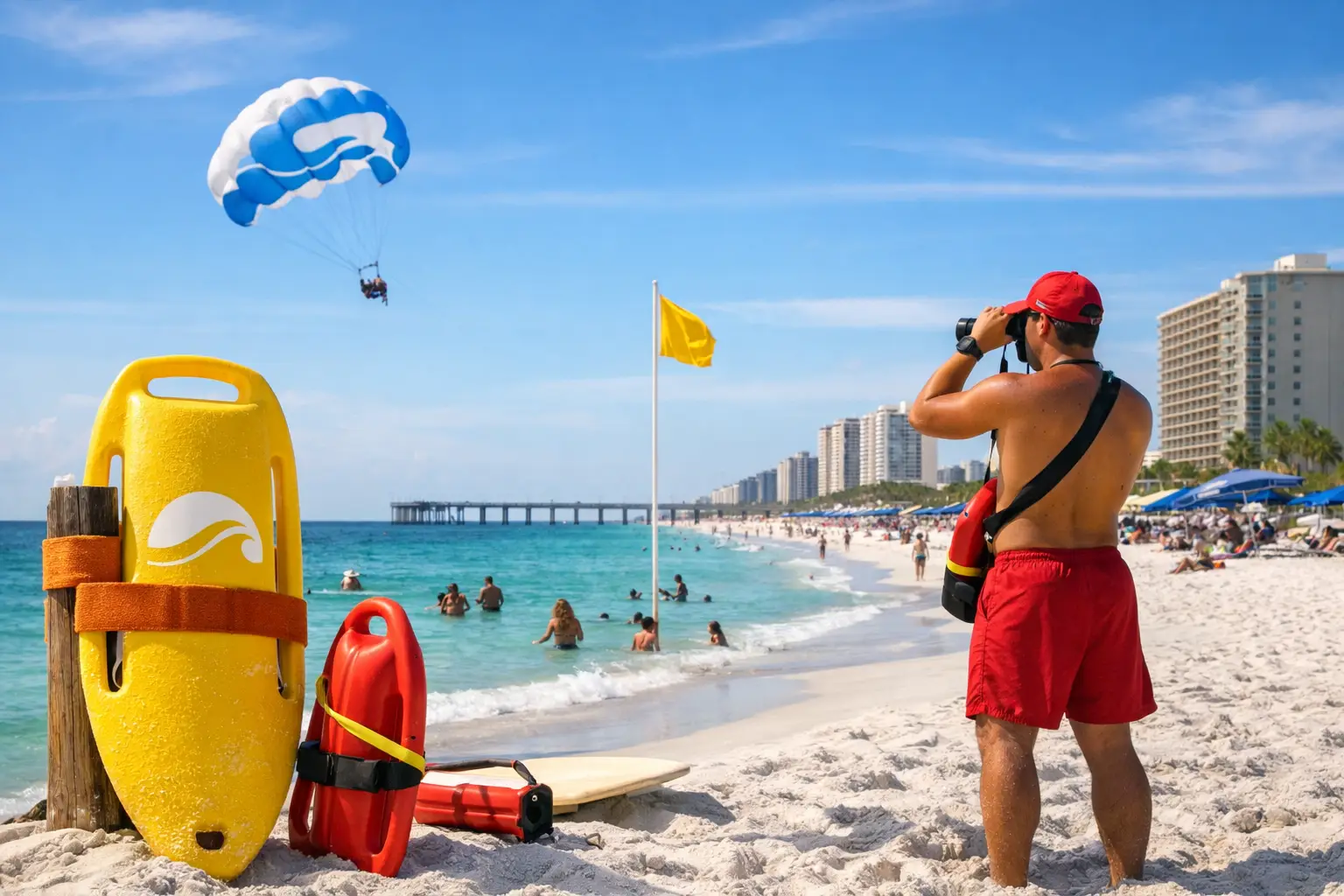
Start your day by checking the beach flag status and the weather. In PCB, flags are not decoration. The flag conditions are posted in every vacation rental managed by Emerald Beach Properties. Check the postings and be aware of what the different colored flags mean. They communicate current water conditions and should drive your plan for the day. If the flags indicate dangerous surf, change the activity. Walk the shore, build sandcastles, or use the pool. A vacation schedule should never overrule beach conditions.

It also helps to set expectations before anyone carries a chair onto the sand. Choose a meeting point. Decide who watches younger children at all times. Put phones in a place where adults can reach them quickly. Small systems prevent confusion when the beach gets crowded.

Understanding the flag system and what it means for your group

The flag system gives you the fastest read on water risk. Many visitors know the colors in general terms but do not always apply them correctly.

A green flag signals calmer conditions, not zero risk. You still need to watch children, assess wave action, and stay aware of drop-offs and fatigue. A yellow flag means moderate hazard. That usually calls for tighter supervision, shallower play, and a more conservative mindset. A red flag means high hazard. Swimming becomes a poor choice for most visitors, especially children, older adults, and anyone without open-water experience. Double red means the water is closed to the public. At that point, the decision is already made for you.

Purple flags warn about dangerous marine life. That does not always mean you need to leave the beach, but you should adjust behavior to avoid contact with marine pests such as jelly fish. Shuffle your feet in shallow water when appropriate, keep a closer eye on children, and avoid casual wading if jellyfish or other hazards are active.

The trade-off is straightforward. Some visitors see a yellow or red flag and feel frustrated because they planned a full water day. The safer choice may feel inconvenient, but it protects the trip. A single injury or rescue can end a vacation much faster than a changed itinerary.

Rip currents are the risk many visitors underestimate

If there is one hazard that deserves serious attention, it is the rip current. In PCB, rip currents can form even when the beach looks calm from shore. They do not always appear dramatic. Often, they look like a calmer, darker, or choppier section of water between breaking waves.

People get into trouble when they fight the current trying to swim directly back to shore. That burns energy fast. If a rip current pulls you away from the beach, stay as calm as possible, float if needed, and swim parallel to the shoreline until you move out of the current. Then angle back toward shore. If you cannot make progress, signal for help and keep conserving energy.

For families, the more practical point is prevention. Stay near lifeguards when available. Keep weaker swimmers in shallow water. Do not use inflatables as a substitute for swimming ability or adult supervision. Wind and current can move floats farther and faster than many people expect.

Who needs the closest supervision

Every beach group has different risk levels, and strong planning helps keep your entire group safe. Young children need constant, active supervision near the waterline, not periodic check-ins from a chair. One adult should watch the child, and that adult should not split attention with a phone, a conversation, or a cooler setup.

Teenagers often create a different challenge. They may look capable and want independence, but they also take more chances in surf. Set clear boundaries for how far they can go and what flag conditions end water activity.

Older adults and guests with medical conditions need their own plan. Heat, fatigue, uneven sand, medication effects, and changing surf can combine quickly. That does not mean they should avoid the beach. It means they should use easier access points, limit time in direct sun, hydrate early, and avoid entering rough water.

Visitors who are confident pool swimmers also need a reality check. Open water demands different judgment. Waves, current, uneven bottoms, and reduced footing change everything you thought you knew about swimming.

Sun, heat, and hydration are safety issues too

Not every beach emergency starts in the surf. In Florida, heat and sun exposure put plenty of visitors in trouble before they ever reach knee-deep water.

Build your day around protection, not recovery. Apply broad-spectrum sunscreen before you head out, and reapply it on schedule, especially after swimming or sweating. Use shade intentionally. A beach umbrella helps, but it does not replace sunscreen or hydration. Drink water consistently through the day, not only when someone says they feel thirsty.

Children often ignore early signs of overheating because they are busy. Adults do the same because they do not want to stop the fun. Watch for flushing, headache, dizziness, unusual fatigue, nausea, or irritability. Those signs deserve action right away. Move into shade, cool down, and hydrate.

The same rule applies to alcohol. A drink on the beach may feel harmless, but alcohol lowers judgment and increases dehydration. That matters more when surf conditions already require caution.

Set up your beach spot with safety in mind

Where you place your chairs matters more than most people think. Choose a spot that gives you a clear line of sight to everyone in your group. Avoid setting up so far from the main activity area that supervision becomes reactive instead of active.

Pay attention to access points and posted notices. Use established walkways rather than climbing over dunes. If there are mobi-mats available, they are the best way to access and leave the sandy beach. Dunes protect the coastline, and damaged dunes create long-term problems for the beach environment. Operational discipline matters here too. Respect the posted rules because they exist for safety, preservation, and access control.

Keep the area organized. Shoes, toys, bags, and coolers scattered across the sand create tripping hazards when people move quickly. If a child bolts toward the water or someone needs help, a cluttered setup slows response time.

Weather changes require fast decisions

Storm risk is one of the easiest hazards to dismiss and one of the most common reasons a beach day should end early. In coastal weather, conditions can shift quickly. Darkening clouds, rising wind, distant thunder, or a sudden drop in beach activity are all cues that it's probably time to pack your gear and head back to the vacation rental.

Do not wait for rain to start before you leave. Lightning can strike well ahead of a storm cell. When thunder is audible, the beach is no longer a safe place to stay exposed.

Wind also changes water conditions, even when the sky still looks inviting. Stronger onshore wind can increase surf and make inflatables harder to control. That is often the moment when families should leave the water, even if they planned to stay another hour.

A safer beach day usually feels less dramatic

The best beach days rarely involve last-second decisions or avoidable rescues. They come from steady judgment. Check the flags. Watch the water. Respect changing conditions. Keep your group close, hydrated, and realistic about their swimming ability.

That mindset protects more than a single afternoon. It gives your family room to enjoy the shoreline with confidence, and it helps every part of the trip run better. When you treat the beach with respect, the experience stays what it should be - memorable for the right reasons.