The Gulf can look calm, bright, and inviting while the sun and heat quietly drain your energy. Sun and heat safety in PCB deserves the same attention you give to beach flags, swimming conditions, and your family’s plans for the day. A Panama City Beach vacation should leave you with photos, sandy shoes, and a good kind of tired - not a painful sunburn or a preventable medical emergency.
Start With the Conditions, Not the Clock
Do not judge the day by the temperature alone. Florida's high humidity can limit how effectively sweat cools your body, and sand, water, and light-colored surfaces reflect sunlight back onto exposed skin. A breezy morning can still bring intense UV exposure, especially when the sky looks partly cloudy.
Check the forecast before you leave your vacation rental and pay attention to the heat index, not only the air temperature. The heat index accounts for humidity and gives a better picture of how hard conditions may feel on the beach or when you are out and about. Also check the UV index. High UV levels call for more frequent shade breaks and stricter sunscreen habits, even if your group plans to spend most of the day in the water.
Build your outdoor time around the strongest sun. Late morning through midafternoon often brings the highest UV exposure. You do not need to avoid the beach altogether, but you should plan a reset during that period. Return to your rental for lunch, relax under reliable shade, visit an indoor attraction, or choose a shorter beach session.
Build Sun Protection Into Your Beach Setup
Sunscreen works best as one layer of protection, not as permission to stay in direct sun all day. Choose a broad-spectrum, water-resistant sunscreen with SPF 30 or higher. Apply it generously before heading outside, including ears, the back of the neck, tops of feet, hairline, and any part lines. Adults need about one ounce - roughly enough to fill a shot glass - to cover exposed skin properly. Don't skimp on sunscreen!
Re-apply at least every two hours and after swimming, sweating heavily, or towel drying. A quick swipe on the shoulders does not provide full protection. Keep sunscreen where you can reach it, not buried in the bottom of the beach bag.
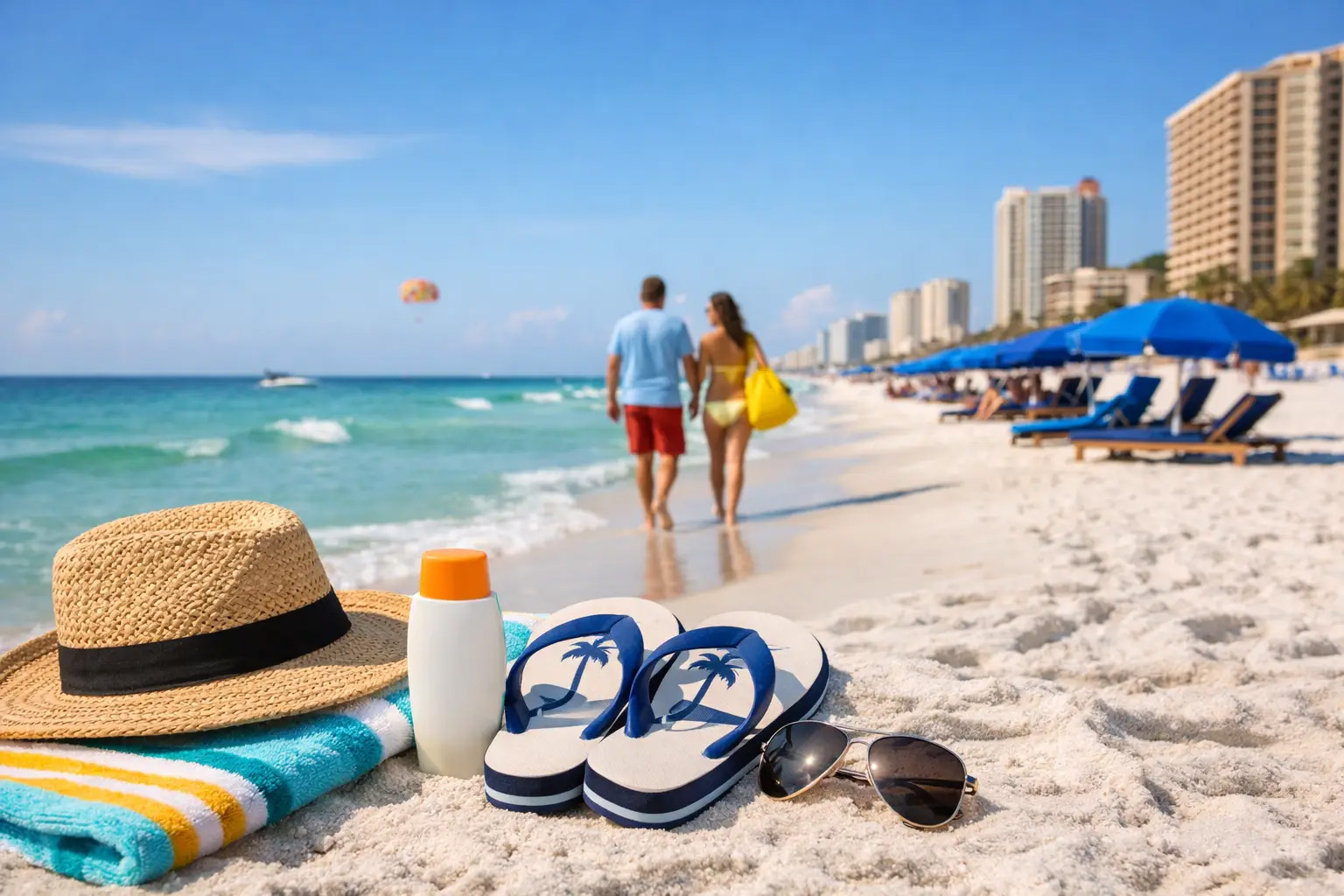
Clothing provides dependable coverage when sunscreen wears off or gets missed. A lightweight long-sleeve cover-up, wide-brimmed hat, UV-protective swim shirt, and sunglasses with UV protection can make a huge difference. For children, a rash guard and hat often prove easier to manage than repeated battles over sunscreen alone.
Shade also needs planning. A small umbrella may help for brief breaks, but it cannot block reflected UV rays and it can become unsafe in wind. Use properly designed beach equipment, follow local rules, and secure items as directed. If wind conditions change, take down umbrellas and canopies rather than trying to hold onto them. No beach setup is worth an injury.
Do Not Let Cloud Cover Fool You
Clouds can make the beach feel cooler without reducing all of the UV exposure. People often skip sunscreen on hazy days, then discover a sunburn later that evening. Treat a bright overcast day as a sun-protection day. The same rule applies when you spend time under an umbrella, on a boat, or in shallow water.
Hydration Requires a Plan
Thirst is a late signal. By the time someone says they feel very thirsty, they may already need a break from the heat. Bring more water than you think your group will use, particularly if children, older adults, or active beachgoers are with you. Keep water cold in an insulated cooler and offer it regularly instead of waiting for requests.
Water should lead the day. Sports drinks can help during prolonged activity and heavy sweating, but they do not replace consistent water intake. Alcohol worsens dehydration and impairs judgment in the heat. If you choose to drink, alternate with water, eat regularly, and avoid treating the beach as an endurance test.
Food matters, too. A meal or snack with water-rich foods, fruit, sandwiches, and salty snacks can support a long beach day better than relying on sugary drinks alone. Do not leave food safety behind in the heat. Keep perishable items cold and discard anything that has been out of your cooler too long.
Heat affects people differently. Children may keep playing long after they need rest. Older adults and people with heart conditions, diabetes, certain medications, or a history of heat illness need more frequent breaks. Ask everyone in your group how they feel before they become visibly uncomfortable.
Know When Heat Becomes Dangerous
Heat exhaustion can develop after prolonged time in high heat, especially with dehydration. Watch for heavy sweating, headache, nausea, dizziness, weakness, cramps, cool or clammy skin, and unusual fatigue. Move the person to air conditioning or shade immediately. Loosen excess clothing, offer cool water in small sips if they can drink safely, and use cool wet cloths or a cool shower to lower their body temperature.
Heat stroke is an emergency. Confusion, fainting, seizures, loss of consciousness, hot skin, or a very high body temperature require immediate action. Call 911. Move the person to a cooler place and begin cooling them with cold water, ice packs at the neck, armpits, and groin, or cool wet towels while help is on the way. Do not give fluids to someone who is confused, unconscious, or unable to swallow safely.
Do not brush off a severe headache, vomiting, or behavior that seems out of character as simple vacation fatigue. The person who insists they are fine may still need to get out of the sun quickly. A short interruption to the day is always the right trade-off when health is at stake.
Sun and Heat Safety in PCB for Families
Families benefit from simple, repeatable rules. Set a water break every 30 to 45 minutes. Make shade breaks part of the plan rather than a consequence when someone overheats. Keep a dry shirt and towel available for children, and check their shoulders, cheeks, and backs for early redness before it turns into a painful sunburn.
A stroller can become dangerously hot, even when it sits under partial shade. Never leave a child unattended in a stroller, parked vehicle, or enclosed beach shelter. If a baby or young child seems flushed, unusually fussy, sleepy, or less responsive than normal, move them to a cool environment and assess them right away.
Adults should also set the example. When parents wear hats, refill water bottles, and call a midday break without complaint, children learn that smart beach habits are part of a hot weather beach vacation.
Make Your Rental Part of the Safety Plan
Your vacation rental gives you a practical advantage: a cool, private place to recover between beach sessions. Stock the refrigerator with water when you arrive, keep electrolyte options available if your group expects to be active, and place sunscreen, hats, and reusable bottles by the door the night before.
After a beach day, cool down gradually indoors, shower off salt and sand, and inspect skin for redness. Apply a fragrance-free moisturizer after sun exposure. If a sunburn causes blistering, severe pain, fever, chills, or widespread swelling, seek medical advice. Avoid additional sun exposure on burned skin until it heals.
Panama City Beach rewards preparation. The best beach days rarely come from pushing through the hottest hours. They come from paying attention, taking breaks before you need them, and leaving enough energy to enjoy the sunset, dinner, and the rest of your stay.