
Where to Find the Best Sea Shells in PCB
The Gulf does not put its best shells on display at noon on a crowded summer day. It delivers them after shifting tides, overnight wind, and changing surf. If you are wondering where to find the best sea shells in PCB, start with timing as much as location. A quiet walk shortly after low tide can turn an ordinary stretch of sand into a memorable family beach activity.
Panama City Beach offers miles of shoreline, but shelling conditions vary from one beach access to the next. The best plan combines a promising location, a low-tide window, patience, and respect for the beach ecosystem. A few well-chosen shells make a better keepsake than a bag filled in a hurry.
Where to Find the Best Sea Shells in PCB
St. Andrews State Park
St. Andrews State Park remains one of the strongest choices for guests who want more than a quick scan along the main beach. Its location near the eastern end of Panama City Beach brings together Gulf water, protected shoreline, and areas where currents can leave behind shell fragments and whole shells. Walk the wrack line - the natural band of seaweed, driftwood, and small debris left by the tide - rather than focusing only on dry, powdery sand.
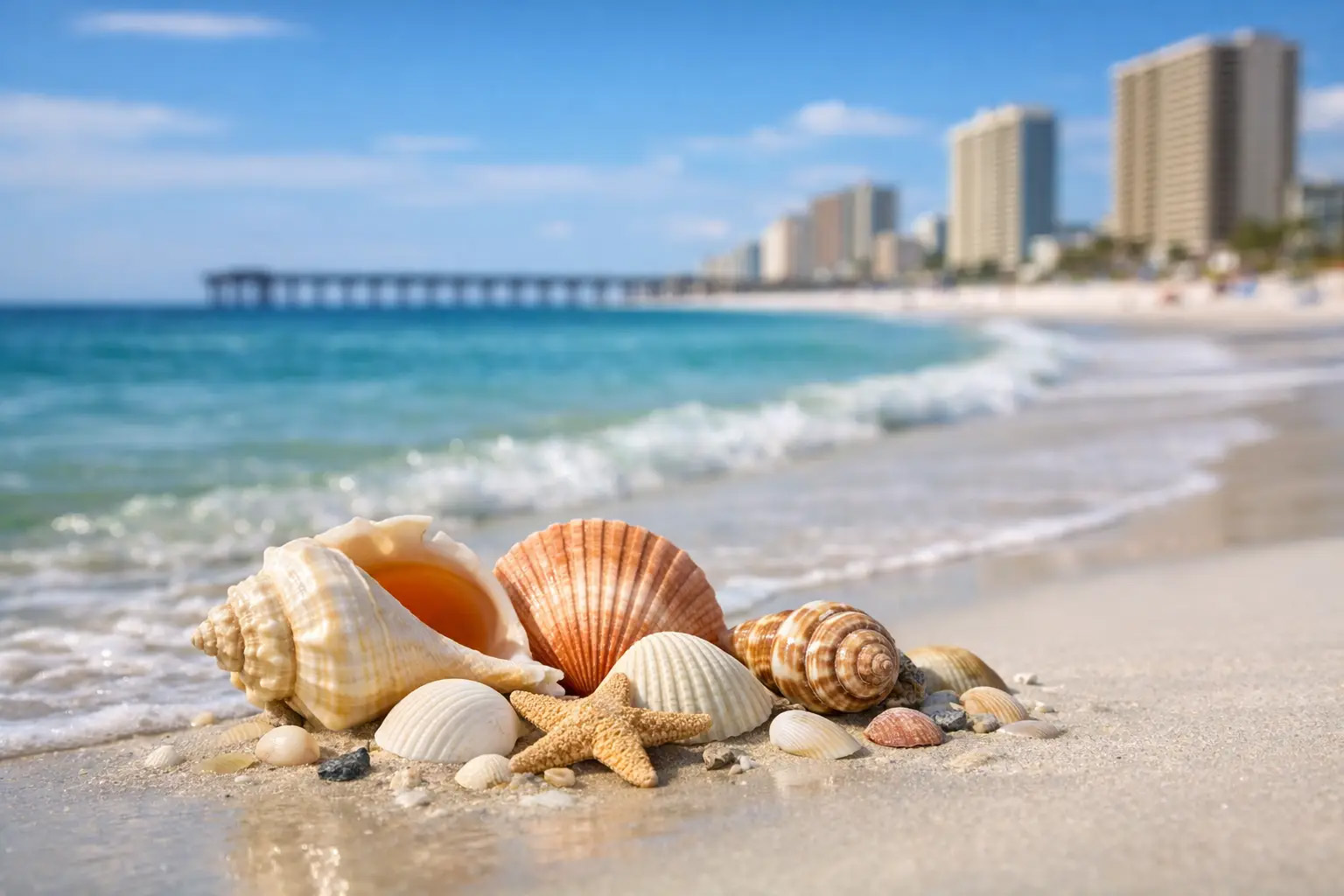
Early morning often works best here, especially after a night of gentle surf. Look carefully near the waterline for scallop shells, coquina shells, augers, moon snails, and small whelks. Conditions change each day, so a productive area one morning may look bare the next.
The park also gives families a more structured outing. Bring water, sun protection, and shoes that handle damp sand and shell fragments. Follow all posted park rules, stay out of protected areas, and leave any shell occupied by a living creature exactly where you find it.
Shell Island
Shell Island earns its name for a reason. This undeveloped barrier island sits across St. Andrews Bay from the developed beach, and its quieter shoreline can reward visitors with a broader variety of finds. Because the island has limited services and requires a boat trip, it suits guests who want to make shelling part of a half-day adventure rather than a short walk between pool time and dinner.
Focus your search along the Gulf-facing side after low tide, then check the bayside if wind or water conditions make the Gulf side rough. The beach can hold sand dollars, scallops, whelks, and colorful fragments, though no location guarantees a full basket. Weather, seasonal currents, and recent foot traffic all affect what reaches the shore.
Plan carefully before you go. Boat schedules, water conditions, and access can change. Pack drinking water, sunscreen, a small mesh bag, and footwear. Do not remove live sand dollars, live shells, sea stars, or any other living marine life. Shell Island stays special because visitors treat it as a natural place, not a souvenir shop.
The West End and Laguna Beach Area
The west end of Panama City Beach, including the quieter stretches near Laguna Beach, can offer excellent shelling when the water settles after a storm or a period of stronger wave action. These beaches often feel less congested than the central resort corridor, which gives early risers more open shoreline to cover.
Search just after sunrise if your schedule allows. Freshly deposited shells tend to stand out before beach traffic spreads them, buries them, or carries them away. Walk slowly in a zigzag pattern between the wet sand and the wrack line. A shell that looks like a small pale stone at first glance may reveal a clean spiral or ridged edge once you pick it up.
This area works well for guests who prefer a simple, self-guided outing. You can combine a shelling walk with breakfast, a morning swim, or a relaxed day at your vacation rental. Check the tide chart before leaving. Low tide gives you more firm sand to cover and exposes areas that remain underwater later in the day.
Public Beach Accesses Away From the Busiest Blocks
You do not need a boat or a state park visit to find worthwhile shells. Many public beach accesses along Panama City Beach can produce good finds, particularly outside the most heavily traveled sections of the beach. The key is to adjust expectations. You may not find rare or perfectly intact shells, but you can still collect attractive scallops, small clams, coquinas, and distinctive fragments.
Choose an access with a broad shoreline and walk at least a few hundred yards in either direction. Concentrated shell deposits often appear in narrow patches where the tide has sorted material by size and weight. When you find one promising patch, slow down. The best shell on the beach may sit within a few feet of the first one you notice.
Time Your Shelling Walk for Better Results
Low tide gives shell hunters an advantage, but it does not work alone. The ideal conditions often arrive after modest wave action followed by calmer water. Strong storms can move shells onto shore, yet rough surf can also make the beach unsafe and scatter shells under heavy sand. Let the water settle before you search.
Morning offers another practical benefit: fewer people have walked the beach. During busy travel periods, guests who start early often find more intact shells than those who begin in the afternoon. If an early start does not fit your vacation schedule, try the hour before sunset. The lower light can make glossy or pale shells easier to spot against darker wet sand.
Avoid searching too close to the water during periods of high surf. Waves can pull adults and children off balance quickly, especially around steep drop-offs. Keep younger shell hunters within reach, and watch the Gulf as often as you watch the sand.
What to Bring - and What to Leave Behind
A small mesh bag works better than a plastic grocery bag because it lets sand fall away as you walk. A reusable container protects fragile shells once you return to your rental. Water shoes help on shell-heavy sections, while a wide-brimmed hat and drinking water make a longer search more comfortable.
Collect selectively. Choose a few shells with distinct color, shape, or personal meaning instead of taking every fragment you see. Never take a shell with an animal inside it. A live whelk, hermit crab, or other creature needs that shell far more than a visitor does. If you cannot tell whether a shell is occupied, set it down gently and move on.
Also respect posted local, park, and wildlife rules. Regulations can vary by location and can change, particularly in protected areas. Leave dunes, nesting areas, and marked habitats undisturbed. Do not dig into dune vegetation or remove natural materials from areas that prohibit collection.
Make the Hunt Part of Your Beach Stay
Shelling gives families a reason to slow down and see the beach differently. Children often enjoy sorting finds by color or shape after the walk, while couples may prefer a quiet sunrise stroll with a small collection pouch in hand. Rinse your shells with fresh water, let them dry fully, and choose a few favorites to display or use in a simple vacation memory jar.
The best shelling day rarely comes from chasing a perfect list of finds. It comes from arriving at the right stretch of shore, giving the tide time to do its work, and leaving enough behind for the next beach walk to feel just as full of possibility.
Posted on 08/12/2026 in Fun Things To Do in PCB, Kid Friendly, Panama City Beach, What to Bring? # Beach, Beach Safety, Sand, Sea Shells